Quick answer: Toddler biting is common early behavior — usually a communication gap, teething, or overwhelm, not aggression. Keep everyone safe, set one calm limit (“I won't let you bite”), care for the child who was bitten, then teach words and safe alternatives. Track the pattern and adjust; call your pediatrician for injury-causing or escalating bites.
Part of the FamilyDecode Method: Decode → Identify → Plan → Practice → Review
Educational note: This article offers general parenting information for families with children ages 1–3. It is not a medical diagnosis or a substitute for professional care. For any bite that breaks the skin, follow wound-care guidance, and contact your child’s pediatrician for repeated, escalating, or injury-causing biting.
Your little one leans in for what looks like a sweet hug, but suddenly leaves a mark on your shoulder. Receiving a call from daycare about a similar incident often leaves parents feeling embarrassed, worried, and unsure of the next steps. Please know that this common behavior does not define your child or your parenting skills.
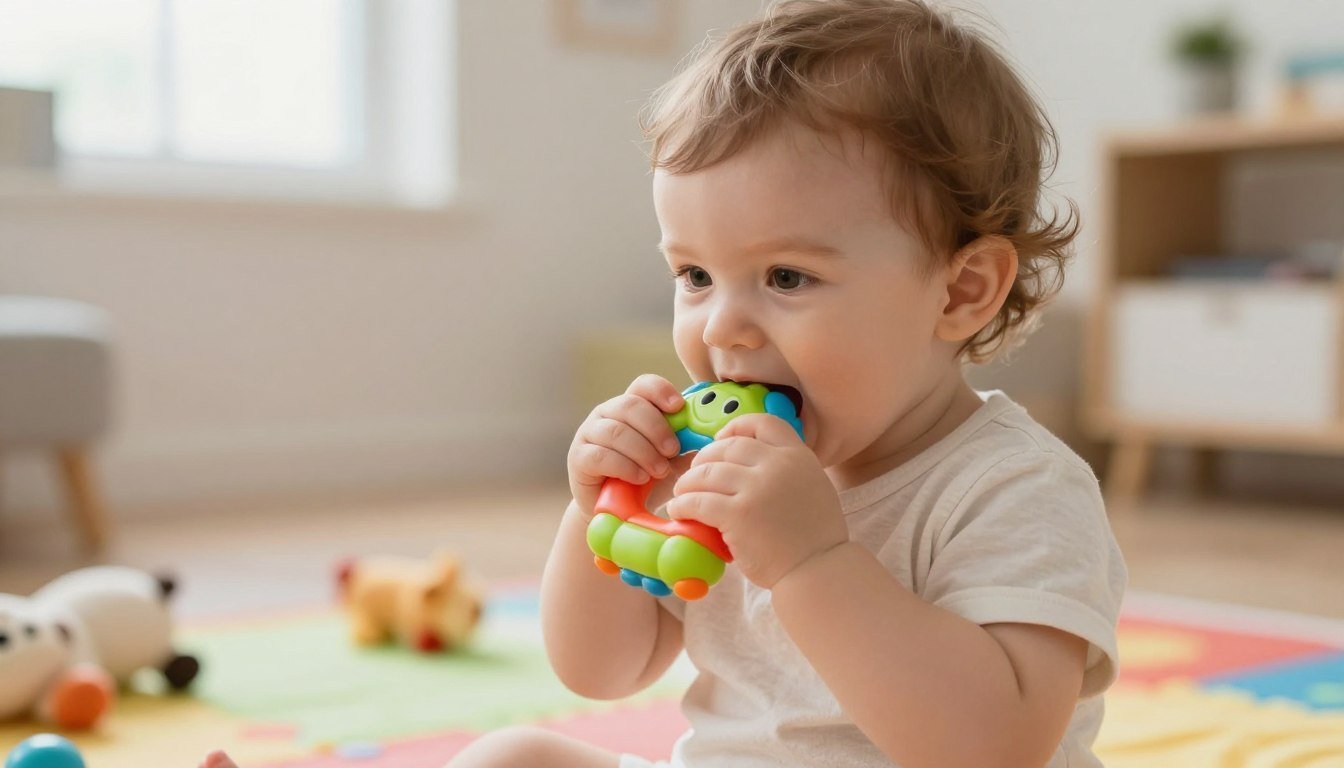
Around age one, biting is often oral exploration — a safe teether redirects the urge.
This educational guide helps you move from panic to a place of understanding. We will explore why these moments occur, whether due to limited language, sensory overload, or teething. You will learn what to do when a toddler bites by tracking patterns and teaching replacement skills. Our goal is to provide calm, evidence-informed strategies to help you manage these challenges effectively.
This article serves as a resource for families with children ages 1–3. It is not a medical diagnosis, but rather a roadmap for navigating developmental hurdles. We will cover immediate safety responses, wound care, and how to coordinate with caregivers. By focusing on how to stop toddler biting through patience, you can support your child’s growth during this intense phase.
Key Takeaways
Understand that this behavior is a normal part of early development, not a sign of aggression.
Identify common triggers like frustration, teething, or a simple need for sensory input.
Maintain a calm, neutral response to avoid reinforcing the action with big reactions.
Focus on teaching replacement skills, such as using words or gentle touches, to express big emotions.
Collaborate closely with daycare providers to ensure consistent strategies across all environments.
A Composite Case Study: What Toddler Biting Can Look Like
To understand toddler biting better, let's look at a typical situation. This example helps us move past guesses and towards a real understanding of why young kids bite.
Maya’s biting incident at a crowded playgroup
Maya, a two-year-old, is at a busy playgroup. The room is full of kids, all wanting the same toys. Maya is playing well, but as the noise grows and someone takes her toy, she gets upset. In this stressful moment, she bites another child.
What the adults noticed before, during, and after the bite
Before the incident, adults saw Maya getting upset as the room got more crowded. During the event, they focused on keeping both kids safe. After the bite, they comforted the hurt child and kept Maya calm and away from the scene.
The table below shows what often leads to these moments:
Environmental Factor
Child's Internal State
Potential Outcome
High noise levels
Sensory overwhelm
Increased irritability
Limited toy supply
Resource competition
Impulsive reaction
Crowded play area
Reduced personal space
Physical boundary testing
Why one incident does not define a child
Remember, one single event doesn't define a child's personality or future actions. When a child bites, it's often a sign of a momentary struggle with controlling impulses, not a flaw in their character.
Use “a child who bit” instead of labeling a child a “biter”
Choosing the right words is important for parents and caregivers. Saying "a child who bit" instead of "a biter" helps avoid negative labels. This change in language helps us see it as a teachable moment rather than a permanent label.
Explain that this case study is composite and educational
This case study is a mix of common patterns seen in early childhood settings. It's meant to help us understand why toddler biting happens. It's not a real child's story or a diagnosis.
Why Do Toddlers Bite?
Understanding why toddlers bite is more than just looking at the act itself. It's not usually a sign of wanting to hurt others. Instead, it's often a developmental milestone showing a child's struggle to understand their world.
Limited language and difficulty expressing needs
Between one and three, kids often feel big emotions but can't express them — the same root behind toddler hitting and big feelings in general. They might want to say "help" or "my turn," but they don't have the words. So, they use their mouth to communicate.
Frustration, anger, and conflict over toys or turns
A toddler biting when angry is common in playgroups. If someone takes their favorite toy, the child feels frustrated. Biting is a way for them to react to losing control.
Teething, oral exploration, and the need to chew
For young kids, teething and biting are linked. The pain of new teeth makes them want to chew. It's a way for them to explore their mouth and find relief.
Fatigue, hunger, sensory overwhelm, and crowded play
Environmental factors can lead to outbursts. A tired, hungry, or overwhelmed child is more likely to bite. Their nervous system is stressed, leading to impulsive actions.
Imitation, attention-seeking, and testing cause and effect
Toddlers are curious scientists. They might bite to see how others react or to get attention. They also imitate what they see, not always understanding the consequences.
Developing impulse control between ages 1 and 3
The part of the brain that controls self-control is still growing. A toddler might know biting is wrong, but can't stop in the moment. They act first, then think about the consequences.
Why there is no single universal cause of toddler biting
There's no single reason why do toddlers bite. Each child is different, and every situation has its own triggers. By looking at the context, like teething and biting or toddler biting when angry, we can understand their needs better.
Toddler Biting: An Age-Aware View for Ages 1–3
Knowing what's normal helps parents deal with toddler biting. Understanding your child's growth stage helps you understand their actions. But, it doesn't mean they should bite others.
What is common around age 1
At one year old, kids explore the world with their senses. Oral exploration is part of this, especially when they're teething. They might bite to test things or people's arms.
How language growth changes biting around age 2
By age two, kids have big feelings but can't express them well. This is why they might bite when they want something. As they learn to talk, they start using words like "mine" instead.
What to expect as a 3-year-old develops self-control
Three-year-olds are learning to follow rules and control their impulses. They might still bite when they're tired or stressed. It shows they need help managing their feelings.
When developmental expectations should not become excuses for unsafe behavior
Knowing a child's stage helps, but it doesn't excuse bad behavior. Safety always comes first. Always teach children that biting is not okay.
Consider communication, sleep, transitions, temperament, and environment together
Looking at why do toddlers bite means seeing the big picture. Things like sleep, noise, and stress can make them bite more. By noticing these, you can help your child better.
Age Group
Primary Driver
Typical Goal
1 Year
Sensory/Teething
Exploration
2 Years
Communication Gap
Expressing Needs
3 Years
Impulse Control
Testing Boundaries
What to Do Immediately When a Toddler Bites
Knowing what to do when a toddler bites helps you stay calm. Your main goal is to keep everyone safe and support all children.
Separate the children safely without pulling or shaming
If a bite happens, act fast to separate the kids. Use gentle but firm moves to keep them apart. Don't pull or handle them roughly. Avoid shaming the toddler to reduce stress and make talking easier later.
Help the child who was bitten first
Always care for the child who got hurt first. This shows empathy and makes the hurt child feel safe and cared for.
Use one calm, firm limit
Once kids are apart, talk to the biter calmly. Use a single, clear statement. Keep your voice steady and avoid long talks that toddlers might miss.
“I won’t let you bite. Biting hurts.”
This exact phrase sets a clear rule. It's part of gentle discipline for biting because it focuses on the action, not the child's character. It teaches the child that their actions affect others.
Move the biting child away from the immediate conflict
After setting the limit, move the biting child to a different area. This change helps them calm down and stops the conflict from getting worse. It's a good way to how to stop toddler biting from happening again.
Keep the response brief and avoid a dramatic audience
Children pick up on adult energy. Keep your response short and avoid making a scene. This helps avoid giving too much attention to the behavior.
What to avoid: yelling, humiliation, biting back, forced apologies, and lectures
Don't yell, humiliate, or bite back. These actions show aggression, not problem-solving. Forced apologies and long lectures don't work well. Instead, focus on calm follow-through to teach better ways to express needs.
When an adult must intervene physically to prevent another bite
In cases of toddler biting parents or other kids, you might need to intervene physically briefly. This is not punishment but a safety measure. Stay calm and ensure your touch is protective, not punitive.
Check the Bite: First Aid for Skin, Bruising, and Broken Skin
Teething and biting are common in toddlers. Knowing how to react when they bite is key for safety. First, stay calm and check the skin for damage.
Care for unbroken skin and mild redness
If the skin is just a bit red or bruised, cool it with a clean, cold compress. This helps reduce swelling and eases discomfort. Keep an eye on it for a few hours to make sure it doesn't get worse.
Clean a bite that breaks the skin
Broken skin needs immediate cleaning to avoid infection. Bacteria in the mouth can cause problems, so keeping it clean is crucial.
Wash hands, rinse with clean running water, and use gentle soap
First, wash your hands well. Then, rinse the wound under clean water for a few minutes. Use mild, fragrance-free soap to clean around the bite, but don't scrub the wound itself.
Apply pressure for bleeding and cover with a clean bandage
If the bite is bleeding, press it firmly with a clean cloth or gauze until it stops. Once it's dry, cover it with a clean bandage. Keep it clean and change the bandage every day until it heals.
Do not use harsh chemicals or ignore swelling and worsening pain
Don't use harsh chemicals like hydrogen peroxide or rubbing alcohol. They can harm the skin and slow healing. Never ignore signs of worsening injury. Swelling, warmth, or persistent pain mean you need to see a doctor.
"Proper wound care is the foundation of recovery. When in doubt, prioritize cleanliness and monitor for any changes that suggest an infection or deeper tissue damage."
Know when a human bite needs prompt medical advice
Most minor bites can be treated at home. But, some need a doctor's help. Call a pediatrician if the bite is deep or if you're unsure about the child's vaccinations.
Seek urgent care for uncontrolled bleeding, deep wounds, facial or eye injuries, or signs of a serious reaction
Go to urgent care if the bleeding won't stop after ten minutes of pressure. Also, seek help for bites on the face, near the eyes, or if they're very deep. Watch for fever or spreading redness, which need quick medical attention.
Injury Type
Immediate Action
When to See a Doctor
Unbroken Skin
Cold compress
If bruising is severe
Minor Scrape
Wash and bandage
If signs of infection appear
Deep Puncture
Apply pressure
Always seek medical advice
Track the Pattern Before Choosing a Plan
Tracking patterns is a great way to understand toddler biting. Our free toddler behavior checklist and 7-day tracker make this simple. It helps you move from guessing to knowing what triggers the behavior.
Tracking what happens right before a bite turns guesswork into a pattern you can act on.
Record what happened immediately before the bite
Pay attention to what happened right before the bite. Look for any demands, conflicts, or changes in the environment.
Note where and when the biting occurred
Context is key in child development. Note the location, time of day, and who was there. This helps you see if certain places or times trigger the behavior.
Capture the toddler’s likely need, words, body cues, and behavior
Watch your child's body language closely. Look for gestures, sounds, or body language that show they're frustrated or need space.
Document the adult response and what happened during recovery
Record how you reacted and how the child settled down. This shows if your response gave them what they needed.
Track sleep, meals, teething symptoms, transitions, noise, crowding, and toy conflicts
External factors can affect a child's emotions. Keep a log of these to see if they're linked to toddler biting.
Use a neutral observation instead of assuming intent
Avoid calling the behavior "mean" or "aggressive." Use neutral language like, "The child bit after another peer reached for the toy." This helps you analyze objectively.
Time/Location
Preceding Event
Child's Cues
Adult Response
10:00 AM / Playroom
Toy conflict
Grabbing, whining
Separated children
2:30 PM / Kitchen
Hunger/Transition
Rubbing eyes
Offered snack
4:00 PM / Living Room
Crowded space
Clenched fists
Moved to quiet area
Decode–Plan–Practice–Review: FamilyDecode’s Behavior Support Method
The FamilyDecode method gives parents a clear, four-step plan for early childhood challenges. It focuses on the child's needs, helping you understand how to stop toddler biting without making assumptions.
Decode: identify the need or trigger without assigning a fixed label
Decoding means looking beyond the behavior to find the cause. Instead of calling a child "aggressive," look for signs like sensory overload or a need for control. Understanding the "why" helps you tackle the real issue, not just the symptom.
Plan: choose prevention steps and one consistent safety response
After finding the trigger, make a plan to prevent it. Set up the environment to avoid conflicts and pick a consistent safety response. Being consistent teaches the child what to expect in stressful times.
Practice: teach replacement skills when the toddler is calm
Teaching new skills works best when the child is calm and open. Use role-playing or simple examples to show them how to express frustration safely. This gentle discipline for biting helps them manage big feelings better.
Review: examine patterns and adjust the plan after incidents
After a biting incident, review what happened. Look for patterns in time, place, or social situations. Changing your strategy based on these patterns keeps your approach effective as your child grows.
Apply the method to Maya’s crowded playgroup scenario
In Maya’s case, the crowded room likely caused sensory overload. The "Plan" might be to move her to a quieter spot before she gets overwhelmed. By "Practicing" how to ask for space and "Reviewing" the results, you can help her feel more confident in social play.
Use the method for toddler biting at daycare and at home
Whether it's toddler biting at daycare or at home, the method is the same. Working with caregivers ensures everyone uses the same approach. This consistency is key for gentle discipline for biting, as it sets clear boundaries everywhere.
Teach Safer Words, Actions, and Sensory Alternatives
Transforming tough moments into learning chances is possible. Introduce simple, effective ways to talk. When kids can't say how they feel, they might bite. Teaching them better ways to act is key to gentle discipline for biting.
Teach short replacement phrases before a conflict
Teaching specific words helps your child handle frustration better. Show them these phrases during calm times. This way, they're ready to use them when things get tense.
“Stop,” “help,” “my turn,” “move,” and “all done”
These phrases solve most toddler problems, and they're the same words we teach for toddler screaming. Tell your child to say “stop” if they feel too close. If they want a toy, they can say “my turn”. Teaching them to say “all done” helps them leave a situation before biting.
Pair words with gestures, signs, pictures, or modeled actions
Many toddlers get more than they can say. Linking a word with a sign or picture helps them understand. Consistency is key; always use the same gesture for each phrase.
Practice asking for a turn and getting adult help
Practice these skills during calm times, not just when it's needed. Role-play asking for a toy or help from an adult. This builds the habit of choosing words over biting during stressful play.
Offer safe chewing options when teething or oral exploration may be involved
Teething can make kids want to bite. If you see teething and biting patterns, give them something safe to chew on.
Use age-appropriate teethers or foods safely and follow choking-prevention guidance
Give cold, firm teethers or chilled washcloths for sore gums. Always watch your child with these items to keep them safe.
"The goal is to redirect the physical impulse toward an object that is safe for the child and others," notes a child development expert.
Reinforce gentle touches, waiting, and communicating needs
Positive feedback is a great tool for parents. When your child waits or uses their words, praise them right away.
Praise the replacement behavior specifically rather than rewarding the bite with attention
Instead of just saying "good job," be specific. Say "I love how you used your words to ask for the truck instead of biting." This shows your child that talking is the best way to get what they need.
Prevent Toddler Biting at Home, Playgroups, and Daycare
Stopping biting starts before a problem happens. Adults can manage the environment and what's expected. Proactive care is key to a peaceful place.
Reduce predictable triggers before play begins
Toddlers get upset when their needs aren't met. Make sure they're well-rested and fed to avoid toddler biting others. Give clear warnings during transitions to help them adjust.
Sharing toys can cause fights. Give each child their own toys to avoid arguments. Also, respect their personal space to make them feel safe, which helps stop toddler biting.
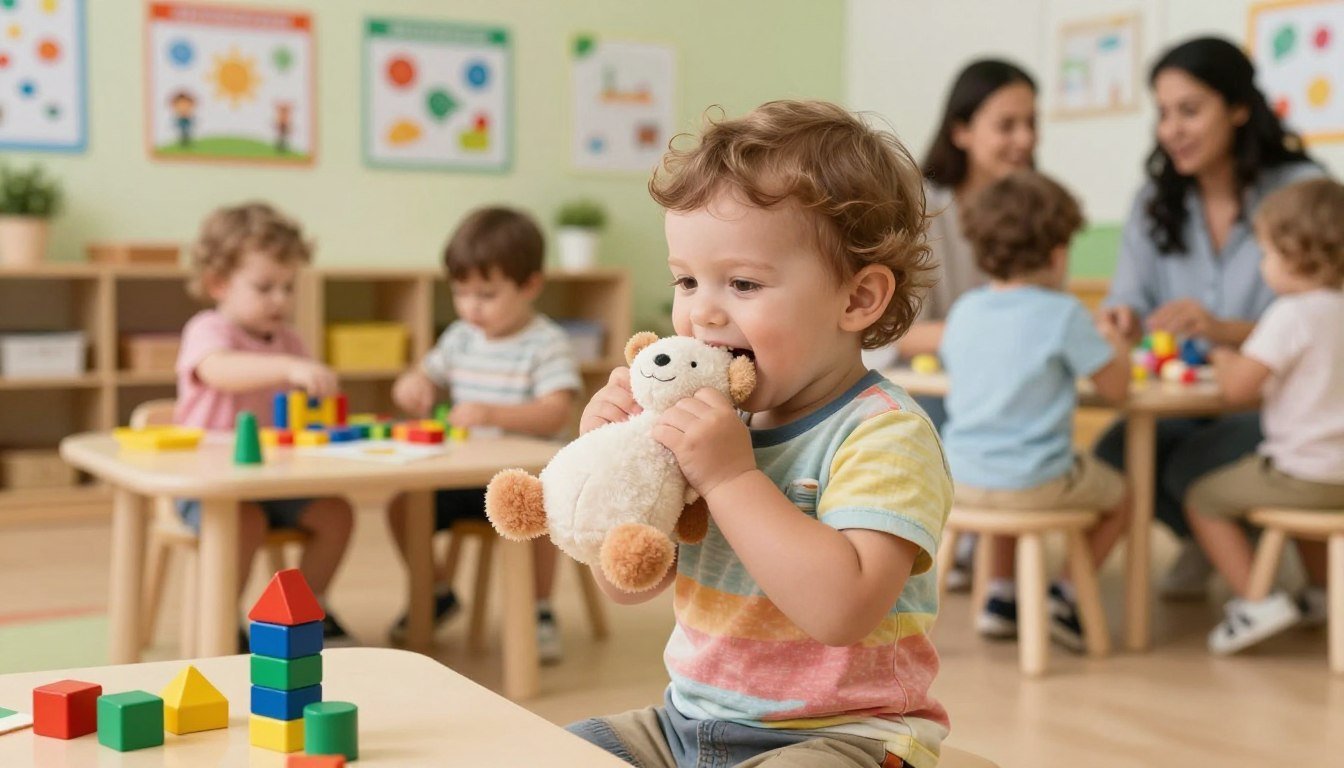
Crowded, high-stimulation rooms raise the odds — closer supervision prevents most bites.
Stay close during crowded or high-conflict play
Being close is the best way to keep everyone safe in busy places. You can stop problems before they start. This makes the children feel safe.
Interrupt early warning signs calmly
Notice hovering, grabbing, clenched jaws, open-mouth lunging, or escalating cries
It's important to know what a child's body is saying. Look for signs like hovering or grabbing. If you see clenched jaws or an open-mouth lunge, calmly guide them away.
Create a coordinated daycare response
Agree on the same brief limit, comfort steps, documentation, and prevention plan
Daycare needs a united effort to handle toddler biting. Being consistent helps the child understand what's okay. All teachers should follow the same steps for comfort and keeping records.
Share useful information without blaming the toddler, family, or childcare provider
Good communication between parents and providers helps everyone. Share facts about patterns, not blame. This teamwork ensures safety and growth for the child.
Trigger Type
Prevention Strategy
Adult Action
Biological
Consistent routine
Prioritize naps and snacks
Resource
Duplicate toys
Provide multiple popular items
Social
Active supervision
Stay within arm's reach
Emotional
Early redirection
Interrupt before the bite
Situation, Message, and Response Examples
Every time a child bites, it's a chance to teach them better ways to talk. By understanding the situation, you can teach them instead of just reacting. Here are some examples to help you handle common problems with patience and clarity.
A toy is taken during parallel play
Situation: another child grabs the toy
Message: “My turn” or “help”
Response: block the bite, return the children to safety, and coach turn-taking
When a child takes a toy, they might bite because they don't know how to say "my turn." Gently block the bite before it happens if you see them getting upset. Teach them to say "my turn" to ask for the toy.
A tired toddler bites a parent when told “no”
Situation: fatigue and frustration during a transition
Message: “Stop” or “all done”
Response: state the limit, reduce stimulation, and offer a calm transition
It's common for toddler biting parents when kids are tired or overwhelmed. This is often because they can't handle saying "no." Keep your answer short, clearly state the limit, and take them to a quiet place to calm down.
A teething toddler bites during cuddling
Situation: oral discomfort or exploration
Message: “Chew this”
Response: end the unsafe contact and provide an appropriate chewing option
Teething and biting can be linked to discomfort, not anger. If a child bites while cuddling, calmly take them away and give them a safe teether or toy. This shows them it's okay to chew, but not people.
A toddler bites repeatedly in a crowded daycare room
Situation: noise, crowding, and limited adult access
Message: “Help” or “move”
Response: increase supervision, create space, and review the environment with staff
When dealing with toddler biting at daycare, the setting often causes the problem. Too many people can overwhelm kids. Staff should watch them more closely and make more space for safe play.
"Behavior is communication. When we decode the need behind the bite, we can teach the child a more effective way to express themselves."
Scenario
Trigger
Replacement Message
Adult Response
Toy Conflict
Grabbing
"My turn"
Block and coach
Parent Interaction
Fatigue
"Stop"
Reduce stimulation
Cuddling
Teething
"Chew this"
Provide teether
Daycare Play
Crowding
"Help"
Increase space
Remember, these examples are adaptable teaching scenarios. Every child is unique, and your response should always be safe and calm. By understanding what they need, you help them learn to handle social situations better.
Questions US Parents Commonly Ask About Toddler Biting
Many caregivers in the United States have questions about managing biting incidents. It's a common challenge that can make parents feel frustrated or confused. By focusing on safety and clear communication, you can handle these moments with confidence.
How do I stop toddler biting without using punishment?
Stopping toddler biting without punishment means focusing on prevention and teaching skills. The best gentle discipline for biting is to stay close during play. This way, you can stop incidents before they start. Teach your child simple phrases to express their needs instead of biting.
What should I do if my toddler bites me when angry?
If your toddler bites you when angry, stay calm and neutral. Toddler biting when angry often shows frustration, fatigue, or a tough transition. Keep your response brief, move away for safety, and help your child find better ways to release energy.
Why is my toddler biting other children at daycare?
Toddler biting at daycare often happens in high-stimulation environments. It's when children struggle with shared space or limited toys. Success comes from teamwork between parents and teachers to support the child.
Does teething explain every biting incident?
While teething and biting are related, teething doesn't explain every incident. Many toddlers bite due to sensory needs, communication gaps, or impulse control challenges. Observe the context of the bite to understand if it's about oral relief or social conflict.
Should I make my toddler apologize after biting?
Forcing a toddler to apologize is not usually effective. They may not understand empathy yet. Instead, focus on repairing the situation by helping your child check on the person they hurt. This teaches them responsibility through actions, not words.
When should I call a pediatrician about repeated biting?
Call a pediatrician if you're unsure what to do when a toddler bites despite your best efforts. Consult your pediatrician if the biting is:
Repeated and doesn't decrease over time.
Severe enough to cause consistent injury.
Escalating in frequency or intensity.
A source of significant concern about your child's development.
Medical Guidance, Professional Support, and Helpful Resources
Dealing with toddler biting can be tough. Sometimes, you need more than patience. Knowing when to get help is key to parenting.
When to call the child’s pediatrician
Ask about frequent, severe, escalating, or injury-causing bites
If your toddler bites a lot or hurts someone, call your pediatrician. Persistent or escalating aggression needs a doctor's check-up.
Discuss biting alongside language delays, regression, developmental concerns, sleep problems, or significant behavior changes
If biting happens with other big changes, like language loss or sleep issues, see your doctor. They can check if these signs point to bigger needs.
When to seek support from an early childhood or mental health professional
Consider a pediatrician, early intervention program, or qualified child-development specialist
For more help, talk to an early intervention program or a child-development expert. They offer individualized support for your child.
Dealing with toddler biting needs patience and understanding. It often comes from communication issues, sensory needs, and emotional struggles. Using gentle discipline helps your child grow without fear.
Handling it well means being consistent and calm. Keep children safe by separating them without blame. Always check the injured child first and make sure they're okay.
Looking for patterns helps you find what triggers biting. Teach your child new ways to handle frustration. Working with caregivers gives your child a strong support system.
A child who bites is not just about that one action. With time and help, they learn to handle social issues better. If biting keeps happening, talk to a pediatrician. Your efforts will help them grow.
Mohamed Lachkar is the Founder & Editor of FamilyDecode. He develops practical family guides, planning tools and resources designed to turn recurring family challenges into clearer, repeatable systems.