
Harvest Moon With Kids: Family Activities & Moon-Watching Ideas
A calm, practical framework — Decode → Understand → Plan → Practice → Review.
A calm, practical framework — Decode → Understand → Plan → Practice → Review.
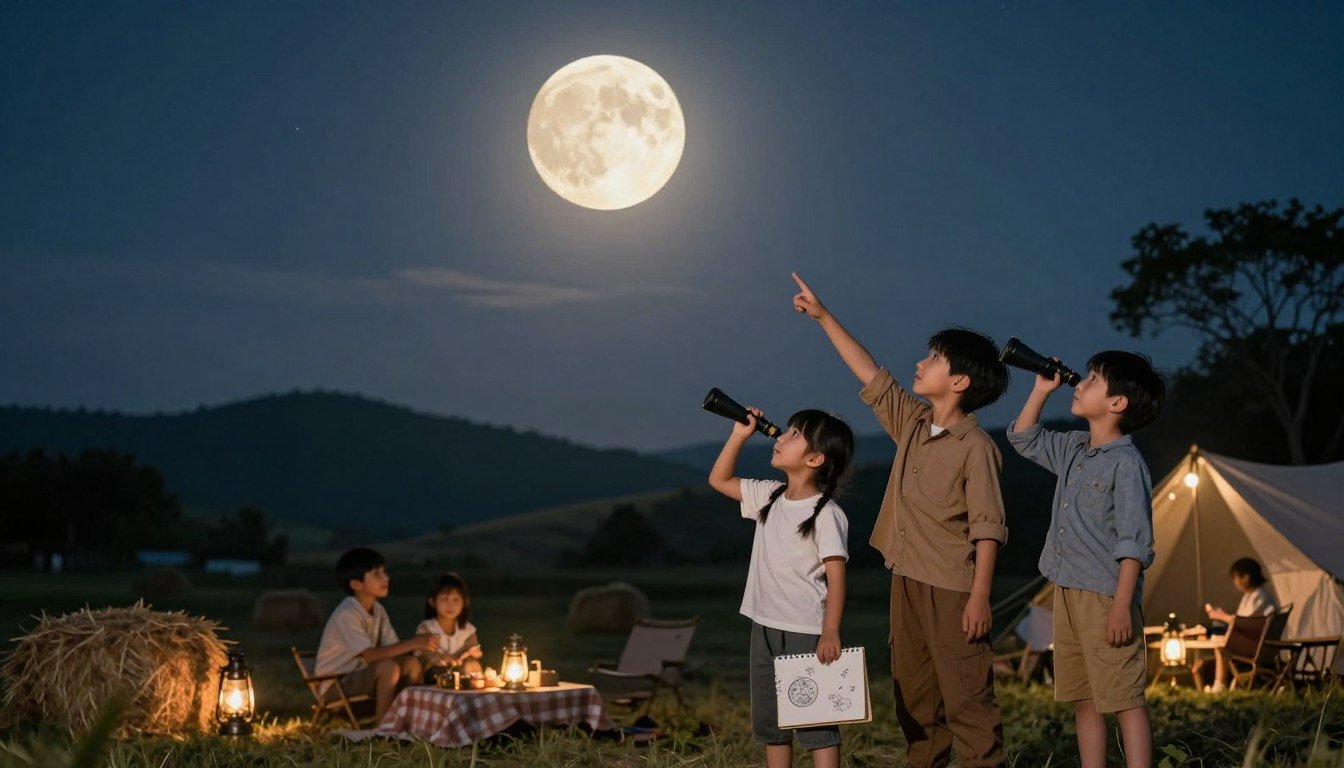
One bright evening can turn your daily routine into a small, magical adventure. Parenting often feels like a race against the clock. At FamilyDecode, we believe in finding simple moments to slow down and reconnect.
Planning a harvest moon with kids needs no expensive gear or complex lessons. It means stepping outside for a quiet, screen-free experience together. Follow your child’s energy and interests instead of chasing a perfect result.
Our approach helps you move from daily chaos toward calmer connections. Use our Decode, Understand, Plan, Practice, and Review framework to turn these family activities into meaningful memories. Even a short look at the night sky can spark curiosity and joy.
Many parents wonder what to expect when viewing the full moon with young children. You may feel pressure to make it perfect, but the best moments come from showing up together. Enjoying harvest moon with kids is gentle and needs neither a telescope nor a science degree.
The Harvest Moon is the full moon closest to the autumn equinox. In the Northern Hemisphere, it usually appears in September or October. Long ago, its extra light helped farmers gather crops late into the evening.
You can call it the "autumn moon" that signals a season change. This natural event marks the move from summer heat to crisp fall air. No complex explanations or superstitions are needed; the moon's beauty can spark interest.
When we practice moon watching with kids, we make room for quiet conversation. This is not a formal lecture or a test of knowledge. We stand together and notice the world around us.
"Curiosity is the wick in the candle of learning."
William Arthur Ward
This shared time lets children ask questions at their own pace. Your child may care more about ground shadows than sky light, and that is okay. The goal is wonder, not a specific educational result.
Every child responds differently to the night sky, and that is part of the journey. Some may show excitement and run around, while others sit and watch quietly. The moon does not control their behavior or sleep patterns.
We suggest keeping these possibilities in mind to stay grounded:
Staying flexible helps ensure that moon watching with kids remains positive for everyone. If the night feels too chaotic, head inside and try again another time. Your presence and willingness to explore matter most.
Finding time for a special harvest moon family night can feel hard during a busy schedule. We want to help you enjoy the night sky without adding stress to your evening.
Choose a time that fits your family’s natural rhythm. Check your calendar for a window after dinner and before bedtime chaos begins.
For younger children, a shorter time often works best. Realistic timing helps everyone stay happy and enjoy the experience.
It may seem fun to plan many family night activities, but simple plans often work best. One main focus helps you stay present and connect with your children.
When you stop trying to "do it all," you make room for true wonder. Focusing on quality over quantity makes the night feel special, not like a task.
Even good plans can change because of weather or a sudden case of the grumpies. A cozy indoor choice can keep the evening positive in any situation.
Keep a favorite book or simple craft project ready. This flexibility shows your children that connection is the priority, not the activity.
On a busy weeknight, keep the plan light. Step outside for five minutes to look at the moon before bedtime.
This short moment together can spark curiosity. It honors the event without disrupting your family’s regular sleep schedule.
Weekends give you more time for a relaxed pace. Share a warm drink or watch the shadows on the lunar surface.
With more flexibility, let the children lead. If they want to stay out longer, follow their lead and enjoy the quiet night.
Every child sees the world differently, so understanding their needs can shape a successful evening. Before our family activities, pause and observe your child. Check their mood so our fall activities for kids bring joy, not stress.
Some children need to burn energy by running or jumping, while others may feel thoughtful. If your child seeks movement, take a short walk to find the best view. If they ask many questions, they may be ready to discuss the night sky.
Other children may want the comfort of a parent’s lap or a quiet place to watch. Respecting these natural rhythms builds a stronger connection. Meet children where they are instead of pushing them toward a set goal.
Make time together more engaging by including things your children already love. If your child enjoys animals, talk about nocturnal creatures awake under the moonlight. If they love stories, share a gentle tale about the stars.
Artistic children might sketch the moon, while science-minded kids may look for craters. Even a simple autumn snack can turn a regular night into a special memory. These personal interests make our family activities feel natural and fun.
Different ages need different levels of participation. Toddlers often need short, sensory-based experiences, while school-age children may enjoy complex observations. With siblings, assign different roles to keep everyone involved.
It is okay to simplify these fall activities for kids for the youngest child. Flexibility helps keep the experience positive for everyone. No one should feel overwhelmed or left out.
Despite careful planning, a child may signal that they have had enough. Watch for rising frustration, aimless wandering, or repeated requests to go inside. Sensory discomfort, such as feeling too cold or tired, also signals that it is time to stop.
If you notice these signs, remember that shortening the activity is a success, not a failure. You can try again another night when everyone feels rested and ready to explore.
Finding the perfect spot for moon watching with kids can turn a simple evening into a magical memory. You do not need to travel far to find a great view of the night sky. Often, the best location is one where your children feel safe, relaxed, and ready to explore.
The Harvest Moon rises in the east, so look for a spot that faces that direction. Find an area free from tall buildings or dense trees that might block your view. If you are unsure where east is, a compass app on your phone can point the way.
Different spaces offer unique benefits for your family. A backyard or park gives room to move, while a porch or balcony feels cozy and contained. If the weather is chilly, watching from a window is a wonderful way to stay warm while enjoying the view.
Bright lights can make it harder for little eyes to adjust to the dark. Turn off porch lights or pull curtains in the room where you sit to keep it dim. This step helps everyone focus on the moon's soft glow and makes your moon watching activities more effective.
| Location | Comfort Level | Accessibility | Best For |
|---|---|---|---|
| Backyard | High | Easy | Active play |
| Porch/Balcony | Medium | Moderate | Quiet observation |
| Window | High | Very Easy | Toddlers/Cold nights |
| Local Park | Low | Varies | Wide horizons |
Preparation is key to keeping everyone happy during your moon watching activities. Pack thick blankets, pillows, and perhaps a thermos of warm cocoa. Simple supplies make cleanup fast and stress-free when it is time to head inside.
We want every child to feel included during our time under the stars. With a stroller or mobility device, choose a flat, paved driveway or smooth park path. For children with sensory sensitivities, bring noise-canceling headphones or a favorite stuffed animal for security.
Planning ahead for safety helps us enjoy the evening with children. A few simple steps keep your night sky activities for kids stress-free and focused on discovery.
Before going outside, walk through the area with your children and spot possible hazards. Clear boundaries show children where they can explore safely.
Flashlights help children explore, but they need guidance. Teach children to point beams toward the ground and light their path.
Remind children that lights in eyes or toward the street can distract people and cause danger. Responsible use of light keeps the area calm and respectful.
Autumn evenings can turn chilly quickly, even after a warm day. Layers help everyone stay comfortable during your night sky activities for kids.
Check the local forecast before going outside for wind or damp conditions. A warm blanket or extra sweater can help your family stay outside longer.
We love looking at the moon, but we must protect our eyes from the Sun. Children should never look directly at the Sun, even during the day.
Watching the moon at night needs no special solar filters or equipment. You can safely enjoy its glow with your eyes or simple binoculars.
Knowing when to stop can be the best part of an outdoor adventure. If temperatures drop too low or children grow tired, head inside.
You may also go indoors if clouds cover the sky or darkness frightens a younger child. Prioritizing comfort keeps your family excited for future stargazing.
We can turn simple moon watching activities into a joyful journey of discovery for children. Rather than start with facts, let children guide the adventure through their own observations.
By slowing down, we make night sky activities for kids a gentle science exploration. This approach helps children trust their ability to notice the world around them.
When we begin observing, we should avoid explaining everything at once. First, listen for what children notice about color, shape, or feeling.
If they say the Moon looks like a banana, agree and ask what else they see. This keeps the talk open and builds genuine curiosity without making it a formal lesson.
Encourage children to study the Moon’s surface. Point out darker patches and bright, glowing edges against the black sky.
Searching for nearby stars or planets can enrich your night sky activities for kids. These details show that the Moon is a physical object in space, not only a sky light.
The Moon changes slightly every night, making it a perfect lesson in observation. Ask children whether it looks the same as yesterday.
Comparing these changes builds critical thinking skills. It is fine if children notice different things because each child sees the world through their own lens.
For our youngest explorers, keep questions sensory and direct. Focus on basic ideas such as light, dark, and shape.
Older children often enjoy questions about “why” and “how.” These prompts help them explore the science behind the view.
| Observation Focus | Prompt for Older Children | Scientific Goal |
|---|---|---|
| Surface Details | Why do you think some parts look darker than others? | Identifying lunar maria |
| Shadows | How do the shadows change as the Moon gets fuller? | Understanding light angles |
| Movement | If we look again in an hour, will it be in the same spot? | Tracking orbital motion |
We use a family moon journal to turn evening sky-gazing into a lasting memory. This simple project makes family activities feel meaningful because it builds connection, not perfection. You do not need fancy supplies, just a notebook and a few pens or pencils.
Encouraging children to sketch what they see helps them slow down and truly observe details. Ask them to draw the Moon’s shape in the sky. They can also note its position near a tree, chimney, or specific star.
A brief record of the setting adds meaning to your memories. Jot down the date and time to watch the Moon change over the month. Note if the air felt crisp or the sky was clear, making later family activities more meaningful.
There is no wrong way to keep a journal. Some children may write a short sentence, while others may add stickers or glue in a printed photo. Flexibility is key to keeping this practice fun and stress-free.
For toddlers and preschoolers, focus on sensory experiences. A page might have a large circle to color or space for a smiley face near the Moon. Keep sessions short to match their natural attention spans.
Older children may enjoy a more structured way to observe. They can measure the Moon’s height with their fingers or track days between full phases. This adds scientific discovery to your shared family activities.
| Age Group | Primary Focus | Recommended Tools |
|---|---|---|
| Toddlers | Sensory exploration | Crayons, stickers, large paper |
| Preschoolers | Shape recognition | Colored pencils, simple sketches |
| School-Age | Patterns and data | Rulers, pens, observation logs |
You don't need a telescope to enjoy meaningful harvest moon activities for kids. These activities spark curiosity and wonder while keeping family time calm and stress-free.
Turn snack time into a science lesson with round crackers, cheese slices, or cookies. You can gently cut or break the food to show the moon's different phases.
Use simple art supplies to show the beauty of the night. Paint a paper plate gray, then sponge on craters for a wonderful keepsake. Sidewalk chalk creates a large, temporary masterpiece.
Sometimes, getting cozy is the best way to connect. Build a soft space on your porch or beside a window with pillows and blankets. This space invites quiet observation.
Hands-on learning helps children understand the moon's surface. Press stones into play dough or glue cotton balls onto paper to show lunar texture. These models add texture to your harvest moon activities.
You likely have everything you need at home. Gather construction paper, old magazines, flour, salt, and leftover craft supplies from your junk drawer.
Use trays or baking sheets to hold loose play dough or chalk dust. An old towel or outdoor workspace can make cleanup much faster and less daunting for parents.
With toddlers and preschoolers, moon time is about connection, not a science lesson. Make these moments special and low-pressure for everyone. An activity does not need to last long to feel meaningful.
Young children often learn best through movement. Let them wiggle, jump, or point at the sky instead of standing still. These moon activities for toddlers work best when they stay brief and allow natural movement.
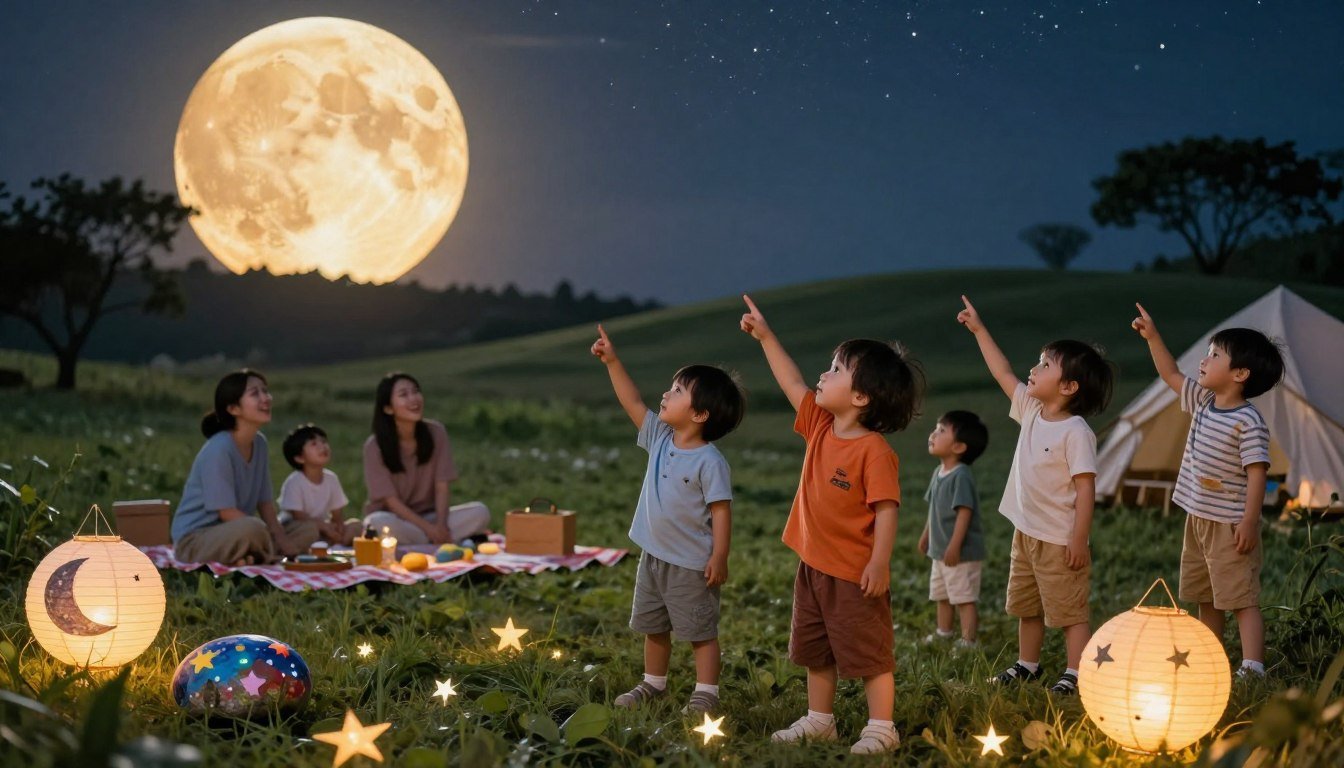
Explain only what children can see. Use simple words like light, dark, round, and shadow for the night sky. This builds vocabulary without overwhelming them with complex science.
Imagination is welcome while you look at the sky. You might call the moon a giant night-light or silver coin, but explain these are playful ideas. Separating facts from pretend play builds a clear understanding of reality and keeps storytelling fun.
If your little one gets restless, try a "quick look" approach. Step outside for one minute, point at the moon, then return inside for a warm drink. This keeps the experience positive and avoids frustration from staying in the cold.
For older children, moon activities for preschoolers can include simple books or drawings. When they ask "why" or "how," say, "That is a great question, let's look at it together." This supports curiosity and keeps the focus on shared discovery.
As children grow, wonder about the night sky can lead to deeper questions. We can use moon activities for kids to help them study patterns above us.
Encourage your child to note where the moon appears on the horizon each night. Mark the spot on a sketch or use a landmark to watch its changes over several days.
These notes show children that the moon moves in relation to our view from Earth. This simple practice builds a meaningful scientific habit from casual watching.
Many children enjoy watching the moon change shape. Ask them to predict how it might look in a few days.
These night sky activities for kids connect the moon's position with its appearance. They build observation skills without needing a telescope.
We can explain that the moon makes no light of its own. It acts like a giant mirror, reflecting sunlight to our eyes on Earth.
Use everyday examples to explain rotation and revolution. A spinning top shows rotation, while a runner circling a track shows revolution. The moon rotates on its axis and revolves around our planet.
Demonstrate these ideas at home with a ball and flashlight. One person holds the flashlight as the sun, while another moves the ball around them as the moon.
This model shows how light and shadows create the phases we see. It is a powerful way to picture complex space ideas in a fun, hands-on setting.
The goal is to keep curiosity alive, not test knowledge. If your child asks something you cannot answer, say, "That is a great question. Let's look it up together later."
By following their lead, you keep these night sky activities for kids as bonding time. Keep talk light, open-ended, and centered on discovery.
Sometimes, your living room offers the best place to enjoy the Harvest Moon. When cold weather or clouds arrive, celebrate with screen free family activities indoors. A short, calm ritual may suit your family better than a tiring outdoor trip.
Choose a favorite picture book about the night sky and read it together. Talk about how the moon looks outside, even when clouds hide it. This helps children connect imagination and reality.
Turn a simple flashlight into an easy tool for discovery. Use hands or paper cutouts to cast shapes on the wall, like moon craters or phases. These family night activities need little preparation and spark curiosity.
Warm the evening with a quick treat, such as cinnamon apple slices or warm milk. Cooking together creates a nurturing atmosphere and helps children feel connected to the season.
Ask children to share one fact about the sky or create a short moon traveler story. A quiet game keeps the home peaceful before bedtime. It also builds listening skills without extra equipment.
When weather keeps you indoors, choose hands-on experiences. Try these ideas to keep the mood light and engaging:
If your children feel tired, keep the family night activities brief and soothing. A five-minute moon chat in bed can match a long project’s meaning. The goal is connection through screen free family activities that respect your child's energy.
As air turns crisp, the Harvest Moon helps children notice autumn’s beauty. Bringing the night sky into our autumn activities for kids connects their observations to the real world outside.
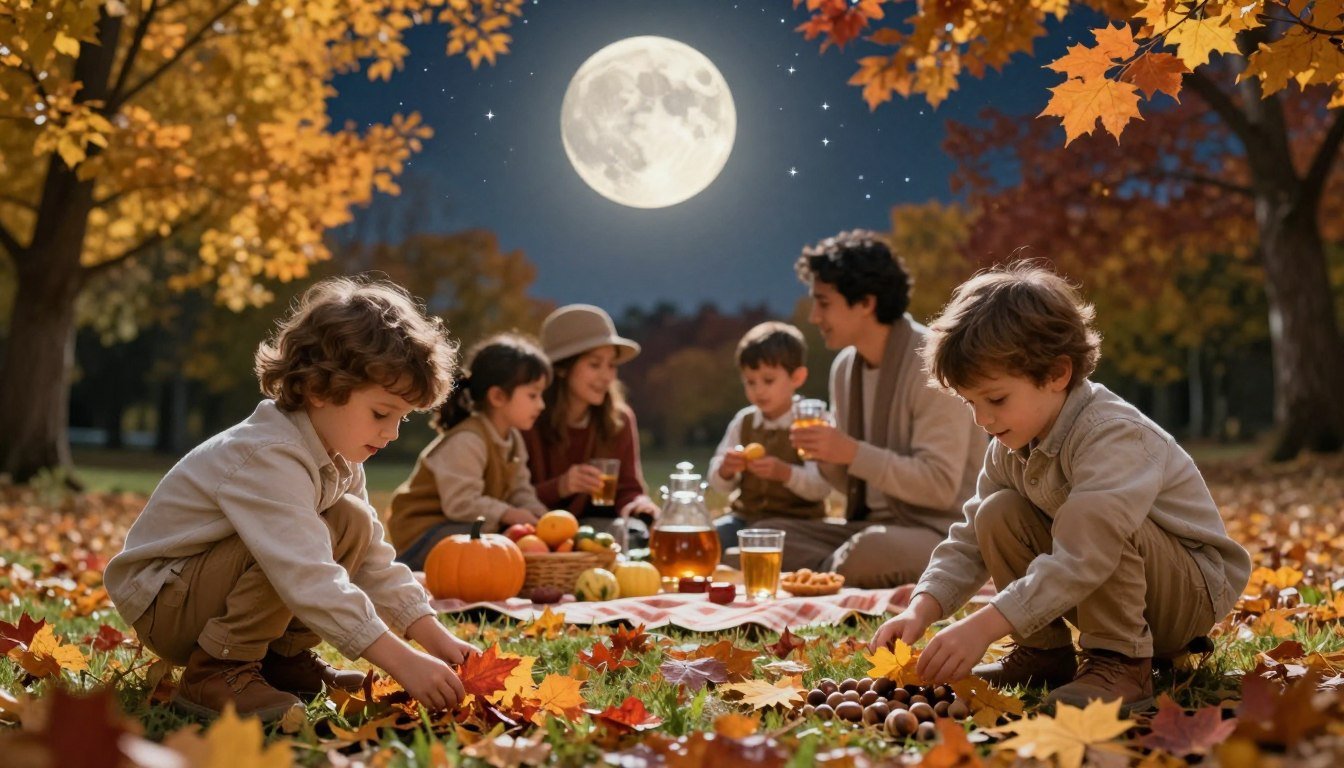
Seasonal change offers children a rich sensory experience. Point out the cooling air, changing leaf colors, and local animals preparing for coming winter.
When planning fall activities for kids, keep the time short and sweet. A quick stroll around the block or driveway can reveal the season’s magic.
Focus on the quality of the experience, not the distance covered. If your child is tired, a short walk still succeeds and keeps everyone involved.
The Harvest Moon’s bright light can remind us to share what we feel thankful for. This practice builds family connection and warmth.
There is no need to connect the moon with special outcomes or mystical beliefs. Treat it as a peaceful anchor for your evening conversation.
Open-ended questions can lead to the best conversations without needing a "right" answer. Try these prompts to spark a meaningful chat:
Remember that simple, funny, or even quiet answers are perfectly valid. The goal is to share a moment, not conduct a formal interview.
A repeatable moon-watching practice creates a gentle way to connect after a busy day. When you plan a harvest moon family night, focus on togetherness, not perfect results. Stay flexible so everyone can enjoy the experience.
A simple structure helps children know what to expect. We suggest the “look, wonder, share” method as a base for your harvest moon with kids. First, look at the sky together; then, invite your child to share one thing they wonder about. Finally, share a small observation of your own.
Specific tasks can help children feel like active participants. One child might hold the flashlight, while another asks the main questions. Adults can keep time so the evening stays comfortable for everyone.
Children may respond to the night sky in different ways. Some may feel immense excitement, while others may feel tired or bored. Let children opt out or move around when needed; forced participation can create tension.
When it is time to go inside, use a gentle signal to end the session. You might say, “The moon will be there tomorrow, but now it is time for our cozy pajamas.” This helps children shift from the wide sky to their comfortable bedtime routine.
Remember that the moon does not control how your child feels or behaves. Although the lunar cycle is fascinating, avoid suggesting that the moon causes mood swings or sleep struggles. Focus on science and wonder to help children build a healthy, grounded bond with nature.
Every family activity can teach you what fits your family best. Do not seek perfection; treat each evening as a gentle experiment. Reviewing your harvest moon activities helps make future outings more enjoyable.
Invite your children to share their views in a relaxed way. Ask, "What was your favorite part of our time outside?"
Then ask, "If we did this again, what should we do differently?" Listening to their answers helps you understand their experience without fixing anything right away.
Consider the practical side of your night. Did the timing match your child’s energy, or did they seem tired? Check whether clothing kept everyone warm and snacks gave a helpful boost.
These details can improve your family activities the next time you go outdoors.
It is okay to drop plans that did not fit your family’s rhythm. If a craft felt rushed or a location was too noisy, let it go. Focus on moments when you felt connected, because those memories matter most.
| Category | Successful Element | Area for Adjustment |
|---|---|---|
| Timing | Started right after dinner | Consider an earlier start |
| Comfort | Used extra blankets | Need warmer socks |
| Engagement | Storytelling games | Simplify the science talk |
This framework can guide your parenting journey. By decoding your child's needs and understanding their cues, you can plan and practice with confidence. The review stage helps you learn from the evening without self-criticism and keep future routines calm and supportive.
You need no perfect plan or costly supplies to enjoy the night sky. Simple harvest moon family activities help you slow down and connect with your children. A few shared minutes of wonder can brighten your evening routine for a long time.
Choose curiosity over strict schedules. Your children will value time together more than an elaborate setup.
Stay flexible when weather or energy levels change without warning. These small changes keep the experience light and enjoyable for everyone.
FamilyDecode supports your move from daily chaos to calmer connections. Use our simple cycle: decode, understand, plan, practice, and review. This method removes pressure and helps you focus on what matters during your harvest moon family activities.
Trust your instincts as you explore the world with your little ones. Each night offers a fresh chance to build memories through observation and play. Even a short walk or quiet window moment creates a bond that lasts after the moon sets.
The Harvest Moon is the full moon closest to autumn’s start. Its bright light once helped farmers work late into the night. Today, it offers a wonderful harvest moon with kids opportunity because it often rises early, before bedtime. It also invites family activities that build curiosity and appreciation for changing seasons.
Many myths say the moon causes "wild" behavior, but we use practical, evidence-based parenting. The moon itself does not change emotions or sleep. Yet a harvest moon family night , a changed routine, or outdoor time after dark can raise energy levels. We use these moments to see whether our child feels overstimulated, tired, or curious.
We recommend a low-pressure approach. You need no elaborate setup for moon watching activities . A five-minute "look and wonder" session from a balcony or bedroom window can match a long outing. Choose one of our harvest moon activities for kids , such as noticing the rising moon’s color. This keeps the experience calm and manageable.
For our littlest explorers, moon activities for toddlers can focus on sensory play and movement. Build a "moon nest" from soft blankets on the grass, or point out the "big, round light" overhead. You can also try autumn activities for kids , like collecting fallen leaves by flashlight, for an exciting adventure.
We always keep a backup plan ready. Move your harvest moon family activities indoors with screen free family activities . Make a "shadow theater" on the wall with a flashlight, or read *Goodnight Moon* by Margaret Wise Brown. These moon activities for kids keep the connection alive when clouds or rain block the sky.
At this age, follow your child’s lead. Moon activities for preschoolers should focus on "noticing," not "testing." Ask, "What do you think those dark spots on the moon are?" Use fall activities for kids , such as Play-Doh models or an Oreo cookie moon-phase snack, to explore shapes.
We want everyone to feel safe and secure. Before night sky activities for kids , set boundaries near roads and water. Remind children to use flashlights safely and never shine them in anyone’s eyes. Dress in warm layers for crisp autumn air, and keep sessions short.
Keeping a journal is one of our favorite family night activities . Younger kids can use stickers or draw a quick circle showing the moon’s shape. Record the date and one thing everyone noticed. This is not about perfect art; it creates a shared memory of your harvest moon activities .
Our "Decode → Understand → Plan → Practice → Review" framework helps reduce family chaos. Decode your child’s energy, then Understand their needs. Plan a fitting activity, Practice with flexibility, and Review what worked. If moon watching with kids ends in a meltdown because it is too late, do not judge yourself. Adjust the plan next time.
We love using the moon as a prompt for gratitude. During your harvest moon family night , ask, "What is one thing you saw today that made you feel happy?" This links autumn activities for kids with emotional well-being and helps us move toward calmer, more connected family moments.
For moon facts, phases and dates to plan your night around, see:
Read next: Bedtime routine by age · The 2-year-old sleep regression · Predictable routines · Emotional regulation
Related reading: Toddler sleep & night waking · Calm screen-time habits · Handling tantrums
Put it into practice: grab the free Harvest Moon Family Night Kit & Moon Journal from our printables library.