
Night Terrors vs. Nightmares in Toddlers: How to Tell the Difference and Help Your Child
← Part of our Toddler Sleep guides
Reviewed against guidance from the American Academy of Pediatrics and Nemours KidsHealth.
← Part of our Toddler Sleep guides
Reviewed against guidance from the American Academy of Pediatrics and Nemours KidsHealth.

It is 2:00 AM, and your little one suddenly screams or thrashes. Our hearts race when we hear this distress. We may wonder if our child has a bad dream or something more serious.
Understanding the difference between night terrors vs nightmares in toddlers is the first step toward comfort.
Distinguishing these events helps you respond with confidence, not panic. Both can feel overwhelming, but they begin during different sleep cycles. Knowing your child's awareness and morning memory gives you clarity.
We will guide you through our proven approach to decode these moments. By identifying the cause, you can plan support and practice consistent habits. One hard evening does not mean a long-term sleep issue; we can help with calm and compassion .
Many parents ask why toddlers wake up crying . The event's details often hold useful clues. Instead of worrying, become a detective of your child's sleep. Gather facts to replace guesses with a clearer view of your little one's needs.
The time of night gives an important clue. Episodes soon after sleep may have different causes than episodes in the early morning. Tracking the clock helps separate common growth stages from other possible triggers.
Watch how awake your child seems during the event. Do they call for you, or seem confused? Noticing these nuances helps show whether your child is awake or moving between sleep states.
Interrupted sleep can leave you frustrated, but try to respond with compassion . Your child is not misbehaving; they are learning to manage a complex sleep system. A neutral record helps you stay calm and focus on solutions.
A simple log can help any parent. Keep a notebook by your bed and write key details when possible. Note these details to build a clear picture of your child's habits:
One difficult night does not mean your child has a chronic sleep issue. Even good sleepers have off nights from growth spurts or minor stress. Consistency is key , but one event rarely causes long-term concern.
| Observation Point | What to Look For | Why It Matters |
|---|---|---|
| Timing | Early vs. Late Night | Helps identify sleep cycles |
| Awareness | Responsive vs. Unresponsive | Distinguishes dreams from terrors |
| Duration | Minutes vs. Seconds | Shows the intensity of the event |
| Triggers | Stress, Illness, or Routine | Reveals patterns in behavior |
Over time, these records can reveal patterns that explain why toddlers wake up crying . This fact-based approach can turn stress into a manageable part of parenting.
Knowing night terrors vs nightmares in toddlers helps parents choose the right comfort. Both can upset families, but they happen during different sleep stages and need different care.
Toddler night terrors are intense episodes. A child may scream, thrash, or look scared while still deeply asleep. These events feel overwhelming but are usually harmless.
During night terrors in children , your child may have open eyes but remain asleep. They may seem inconsolable, push you away, or speak without sense. This is not a nightmare; they are caught between sleep stages.
These episodes happen during deep, non-REM sleep, when the brain cannot form memories well. Your child may wake with no recollection and act as if nothing happened.
Toddler nightmares are vivid, scary dreams that often wake a child fully. The child then seeks comfort. Unlike terrors, nightmares are emotional responses to dream content.
During a nightmare, the child is often alert and aware of the room. They may call for you, cry, or name fears from the dream.
Nightmares happen during REM sleep, when the brain is active and can store memories. Once calm and awake, your toddler may describe a "scary monster" or a "bad dream".
To identify the event, look at each sleep pattern. The table shows the main difference between night terrors and nightmares in toddlers .
| Feature | Night Terrors | Nightmares |
|---|---|---|
| Timing | Early in the night | Late in the night |
| Awareness | Mostly asleep | Fully awake |
| Memory | None | Often remembered |
| Comfort | Safety focus | Reassurance focus |
Most toddler night terrors happen within the first few hours of bedtime. This is when the body moves through its deepest sleep stages.
In contrast, toddler nightmares are more common in the early morning hours. This is when REM sleep, the main dreaming stage, lasts longest.
It is normal for one child to have both sleep disturbances. Sleep cycles change as children grow, so new challenges may appear. Focus on whether your child is awake or asleep, not on a permanent label.
Sleep changes often come with rapid toddler growth and development. When you face toddler sleep problems , remember your child is not trying to be difficult. Their brain and body work hard to understand a world that grows each day.
At this age, a child's nervous system is still learning to guide sleep cycles. Sleep is less steady than an adult's, so moving between deep and light sleep can be hard.
This biological immaturity can sometimes leave the brain "stuck" during a sleep change. Night terrors may happen while the body partly wakes and the brain stays deeply asleep.
As your toddler's language skills grow fast, imagination grows too. Creative play is wonderful, but new ideas can also cause child sleep anxiety . Toddlers may imagine things that feel scary or unfamiliar.
They are learning to separate reality from fantasy, but the process is not perfect. A wall shadow or monster story can suddenly feel real to a developing mind.
Even a settled toddler may struggle when daily routines change. Overtiredness is a major cause because an exhausted brain cannot settle into deep, healing sleep.
Illness, discomfort, or excitement about a new milestone can also affect sleep. When the body feels stress, sleep often shows the first signs of strain.
Big life changes often appear at night. Starting a new daycare, moving to a new house, or adjusting to a different family schedule takes emotional energy.
What children see and hear during the day can enter their dreams. Even harmless screen content may overstimulate or confuse a toddler, causing restless nights.
It is vital to meet these moments with compassion , not frustration. Your child does not choose to wake or act out; they respond to major changes in development.
These disruptions do not show a character flaw or planned misbehavior. They reflect a growing nervous system that needs your patience and steady presence to feel safe again.
Seeing your child upset at night can feel scary, so learn the signs before choosing a response. These signs can show whether you are dealing with a nightmare or toddler night terrors . Knowing the difference helps you give the right comfort when your child needs it most.
During an episode, your child may seem highly upset. They may scream, thrash, or sit up quickly while their eyes look glazed or unfocused. Even while moving, they often seem completely unaware of you.
Children may push you away or resist touch during these moments. They are not rejecting you; they remain in deep sleep. Trying to wake them may cause more confusion or upset, a key sign of night terrors in children .
These episodes often leave little or no memory. Afterward, your child will likely drift back into peaceful sleep. By morning, they usually have no memory of the event.
Unlike terrors, a nightmare usually wakes your child fully. They may call for you, seek closeness, and welcome your soothing voice or a warm hug.
Because they are awake, your child can often tell you what scared them. They may describe a scary character or a specific dream situation. This shows they are fully alert and processing the experience.
Children with nightmares often remember the fear clearly. They may fear returning to sleep because the dream could come back. This lasting worry suggests the event was a dream, not a sleep-state disturbance.
Most toddler night terrors are harmless, but some behaviors need closer attention. Watch for physical injury, rhythmic or unusual body movements, or major breathing changes. Also note if your child seems unusually distressed or exhausted during the day.
Occasional night terrors in children are usually a normal part of development. If episodes become more frequent, intense, or disruptive, track them. A simple log of each event can help if you consult a professional.
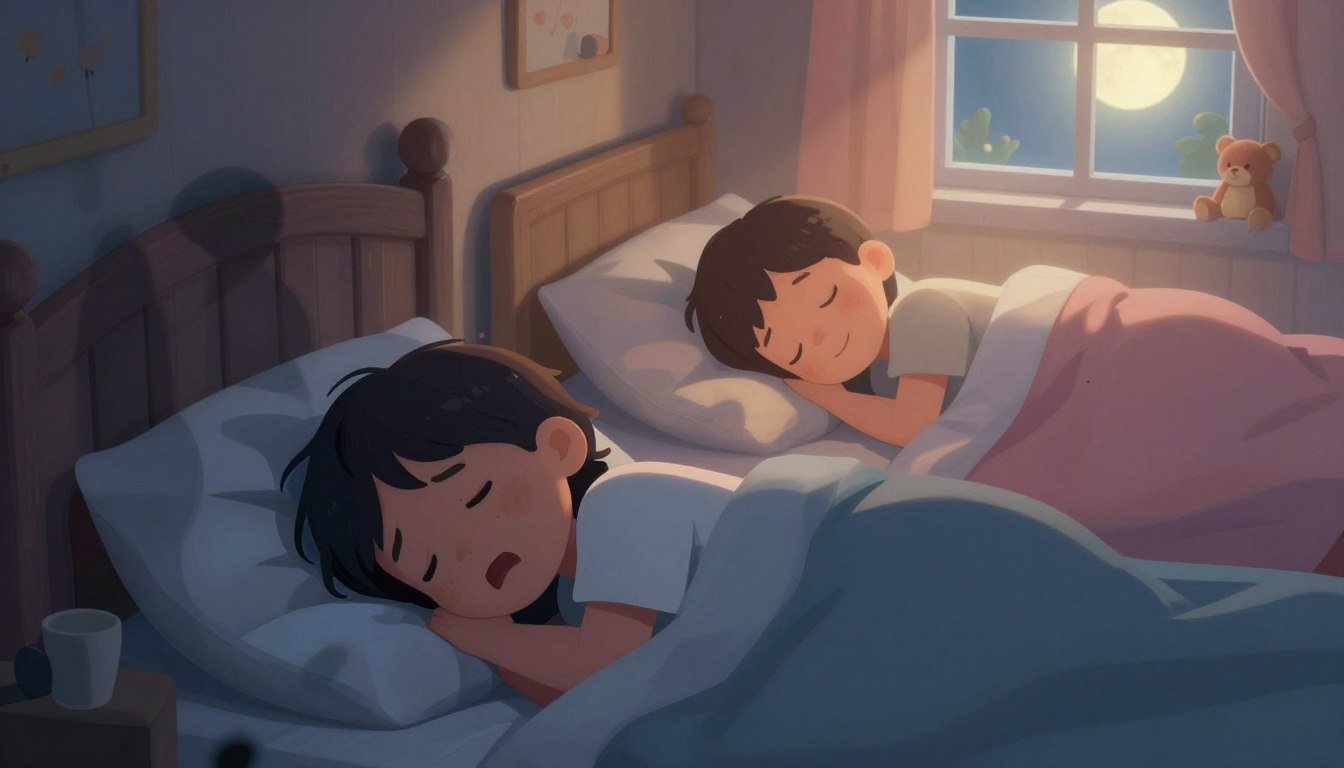
Knowing how to respond during toddler night terrors can make a frightening moment easier to manage. These episodes look intense, but they pass quickly. Use a gentle, hands-off approach to keep everyone safe.
Your main goal is keeping your child safe during this deep, confused state. Scan the room and move hard, sharp, or breakable items away from their path. This helps prevent accidental injury.
You may want to wake your child, but forcing them awake can cause more confusion. Stay nearby as a quiet, steady anchor until the episode ends.
If you speak, use a low, calm, rhythmic voice. Say, “You are safe. I’m right here,” to comfort your child without overstimulating their brain.
During toddler night terrors , your child may not know what happens around them. Questions or demands may increase frustration, so offer quiet support instead.
A light touch on the back or hand may soothe your child. Watch their reaction closely. If they pull away or seem upset, give them space and stay nearby.
If your child moves, gently guide them away from stairs or doors. Use soft physical redirection. Avoid shaking or restraining them , because this may cause distress or lashing out.
Most children drift back into peaceful sleep on their own. If your child wakes fully, offer a quick cuddle. Then help them settle back into bed with little fuss.
Children often have no memory of toddler night terrors the next morning. This lack of memory is normal. It does not mean your child suffers or feels pain.
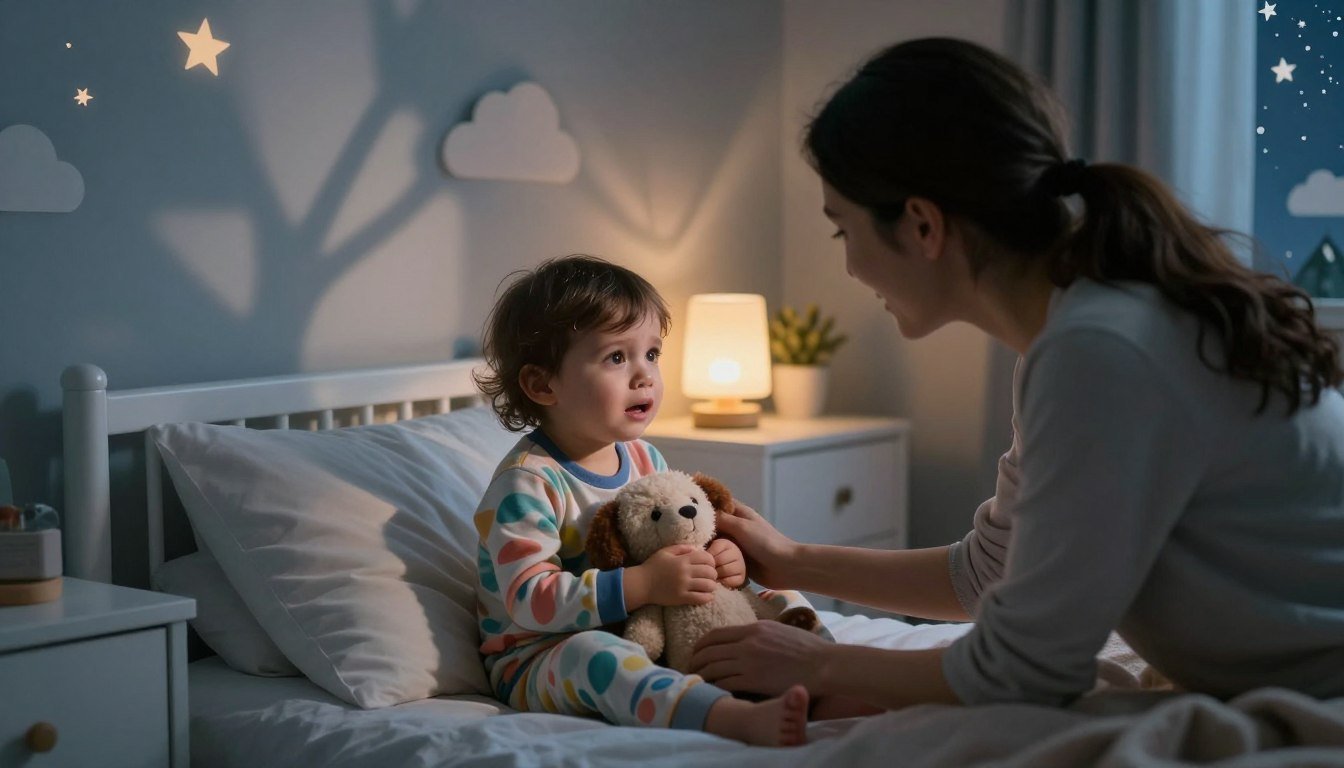
After a bad dream, calm care helps your child feel safe again. When you understand toddler nightmares , you can offer steady support.
Touch can quickly calm a child who feels overwhelmed. A gentle hug or handhold helps them feel physically connected to you and less alone.
Use simple, direct words to avoid overstimulating your child. Say, “That felt scary, and you are safe with me now.” This script honors their feelings and immediately establishing a sense of safety .
You may wonder why toddlers wake up crying after a dream. Focus on comfort, not analysis, and honor their feelings without making the dream seem real.
Help your child separate imagination from reality. Saying, “Dreams can feel real, but it was not happening in this room,” gives them a gentle boundary and helps them return to the present.
Keep the room quiet and dark to encourage sleepiness. Offer a stuffed animal or blanket for consistent comfort , and check briefly so your child knows you are near.
Do not search under the bed or turn on bright lights; these actions can strengthen fear. Keep things calm so your child can return to sleep naturally.
If you want to know how to stop toddler nightmares , explore their themes during the day. Art or play can be highly effective, helping your child share worries in a safe, controlled setting.
A personal mantra can reduce child sleep anxiety . A phrase like “I am brave and I am cozy” helps your child face nighttime fears.
| Strategy | Goal | Best Time |
|---|---|---|
| Physical Touch | Immediate grounding | During the episode |
| Simple Scripts | Validation and safety | During the episode |
| Daytime Play | Processing emotions | During the day |
| Bedtime Mantra | Building confidence | Before sleep |
When we consider how to stop toddler nightmares , a steady daily routine offers a strong starting point. Predictable days help children feel safe and lower stress before sleep.
Consistency anchors your child’s internal clock. Similar wake-up and nap times help prevent toddler sleep problems .
An overtired child may struggle to settle and wake more often at night. Watch your child’s energy levels to protect needed rest.
A steady routine tells your child that bedtime is near. This gentle transition lowers child sleep anxiety by making the day's end easy to understand.
Bedtime should offer bonding, not feel rushed. Quiet connection builds safety and makes sleep feel less difficult.
A calm room supports deep sleep. Soft light and steady sound, such as white noise, can block sudden household noises.
Safety supports a good night's rest. Keep loose items out of the crib or bed, and follow current safety guidelines.
Daytime content can shape nighttime dreams. Choose gentle stories and avoid media with scary ideas or intense images.
Screens may overstimulate children and disrupt natural sleep hormones. Keep bedtime positive, without threats or punishments that increase emotional tension .
Change takes time, so watch patterns before making large adjustments. A simple log can show what works and what needs more attention.
Parenting involves learning and trying new approaches. Stay curious as you support your child’s well-being.
| Habit Category | Primary Goal | Expected Benefit |
|---|---|---|
| Consistent Schedule | Regulate internal clock | Fewer night wakings |
| Bedtime Sequence | Emotional connection | Reduced bedtime resistance |
| Environment | Physical comfort | Deeper, uninterrupted sleep |
| Media Limits | Lower stimulation | Fewer scary dreams |
A steady method can turn stressful nights into manageable moments. Learning to spot night terrors vs nightmares in toddlers helps you respond with confidence each time.
First, watch what happens without guessing. Focus on what you see and hear right then.
This likely shows a night terror. The child may seem unreachable , and your presence may not calm them at once.
This points to a nightmare. The child is awake, knows you are there, and can describe one frightening image.
One response does not fit every episode. For night terrors vs nightmares in toddlers , match your approach to the child’s state.
Keep your voice low and steady. Offer a safe presence without trying to wake the child.
Give physical comfort and name the feeling. This can help the child feel safe enough to sleep again.
Consistency can lower worry for parents and children. When everyone knows the plan, responses become automatic.
Decide who will handle the wake-up. Use the same reassuring phrases so the child feels grounded with either parent.
Clear toys from the floor and remove hazards from the sleep space. A safe room helps you stay calm during an episode.
Staying calm is easier after daytime practice. Role-playing helps you remember the right actions.
Practice keeping the room quiet and dim. Remember, forced waking rarely helps and may increase confusion.
Acknowledge the fear without treating the dream as real. Say, "I hear that you are scared," without confirming the "monster" is real.
Keep a simple log of these episodes. It can reveal triggers and guide small, meaningful changes.
Track night terrors vs nightmares in toddlers alongside bedtime, naps, illness, and stress. Small changes to naps or bedtime may make a big difference.
Change takes time, and progress rarely follows a straight line. Celebrate smooth nights as you build a healthier sleep foundation for your child.
Your child's sleep can feel hard to manage, especially when you are unsure whether a doctor should help. Many toddler sleep problems are normal parts of development, but some signs need a pediatrician. Your family can get clear advice and support.
Talk to a pediatrician if sleep problems upset or exhaust your whole household. If episodes keep your child from getting needed rest, a pediatrician can look for causes.
Seek medical advice if sleep problems start suddenly and continue after bedtime routine changes. This can help rule out other causes that affect your child's rest.
Watch for signs beyond typical night terrors in children . Contact your doctor if you see any of these signs:
Breathing patterns can show problems with sleep health. Snoring, gasping, pauses in breathing, choking sounds, and ongoing mouth breathing can signal trouble. These important signs need medical evaluation to check comfortable breathing all night.
Seek help if your child seems unusually tired during the day or changes behavior. Also ask about concerns with development or daily functioning.
Keep a simple sleep log to make your visit more useful. Record when each episode starts, how long it lasts, possible triggers, and how your child returns to sleep.
If you record a video, do so only when safe and while you can comfort your child. Never delay seeking help just to capture footage; your description often gives a doctor enough information.
Seek immediate medical attention when your child has severe breathing trouble or a serious injury. Call emergency services or visit an urgent care center for these problems. Get help if an episode lasts unusually long or will not resolve.
Understanding night terrors vs nightmares in toddlers can build confidence during middle-of-the-night wake-ups. You can tell whether your child needs gentle presence or active comfort.
Remember, your calm, steady response is your most powerful parenting tool. Observe your child without judgment to create a safe space for emotions and rest. Consistent routines and a secure environment support better sleep for everyone at home.
Use the FamilyDecode method as your little one grows. Stay observant and patient, and track patterns as you adjust their routine. Track patterns to see how adjustments improve their sleep quality over time.
If you feel unsure about your child’s health or safety, contact your pediatrician for professional guidance.
You are doing a wonderful job supporting your child through developmental milestones. Trust your instincts, stay connected, and nurture the peaceful sleep your family deserves.
The clinical distinctions in this guide reflect current pediatric guidance. For authoritative background, see:
Read next: Toddler sleep regression & night waking · Bedtime routine by age · Toddler won’t nap · Separation anxiety
Related reading: Predictable routines · Emotional regulation · Preparing for a new baby · Gentle potty training
Put it into practice: the Calming Bedtime Ritual planner — a predictable wind-down that protects the deep sleep behind fewer terrors.