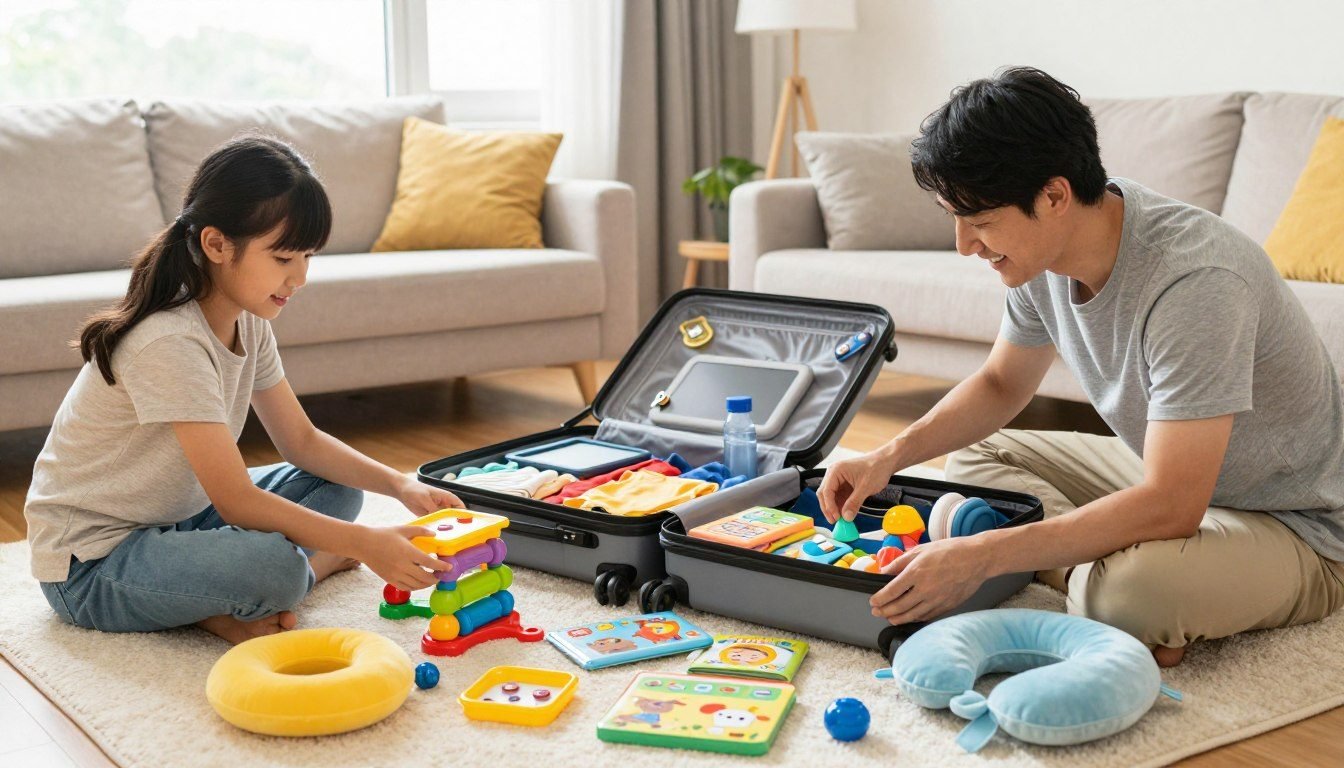
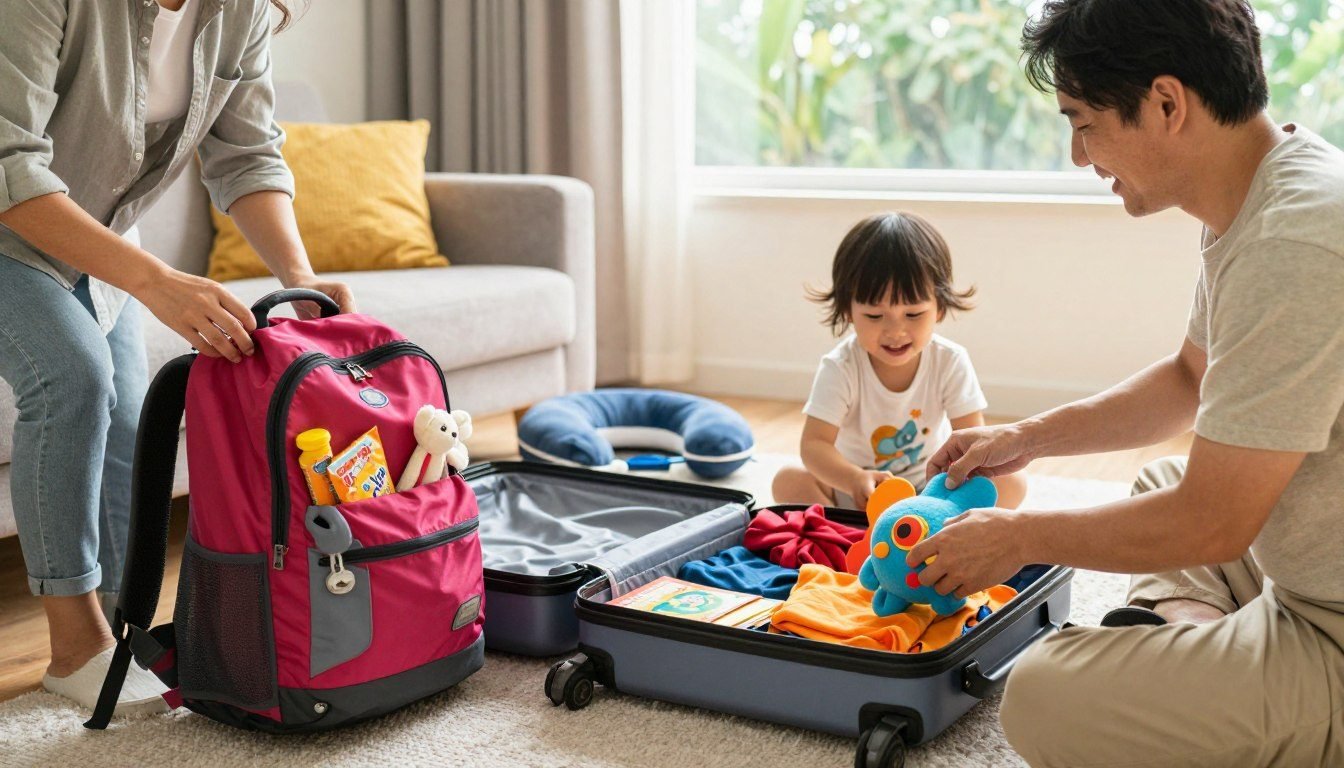
Travel Necessities for Kids: 30 Must-Have Items for Stress-Free Family Trips
Quick answer: Traveling with children gets easier when your gear supports your family instead of promising a perfect trip. The real travel necessities for kids cover four needs — comfort, care, safety, and connection. This guide gives you a 30-item checklist plus flight, road-trip, hotel, and vacation lists, all organized around the FamilyDecode rhythm: Plan → Prepare → Travel → Enjoy. Grab the free printable and pack from a list, not from memory.
A note on links: Some links below are Amazon links. As an Amazon Associate, FamilyDecode earns from qualifying purchases at no extra cost to you — see our Affiliate Disclosure. We recommend by category and only suggest what genuinely helps.
Traveling with your children does not have to feel overwhelming. The most useful travel necessities for kids are more than physical supplies — they also carry comfort, familiar routines, and emotional security, which help your family stay calm while you explore the world.
By choosing meaningful connection over perfection, you can transform the trip itself. We use the FamilyDecode rhythm — Plan → Prepare → Travel → Enjoy — to organize family adventures with less stress and more room for the memories. This guide gives you a curated 30-item checklist plus tailored advice for airplanes, road trips, and hotel stays.
Key takeaways
Prioritize emotional security alongside physical gear to keep children calm.
Adopt the Plan, Prepare, Travel, Enjoy rhythm to simplify your planning.
Focus on building family connection rather than a flawless trip.
Use the 30-item checklist as a menu — take what fits your child and destination.
Follow the setting-specific lists for flights, cars, hotels, and week-long stays.
Plan a calmer trip around your child’s real needs
Every child is unique, so your packing list should fit your child. When you plan around personality and routine, your kids’ travel essentials can genuinely support the family.
Step 1 · Match the plan to age, temperament, and routine
Start with your child’s daily rhythm. If your toddler naps on a schedule, your essentials should support rest in new places; if food is a sticking point, pack familiar favorites. A few questions make the trip smoother:
Sensory needs: would noise-canceling headphones or a specific fabric help them feel comfortable?
Toileting: fully trained, or do you need extra supplies for accidents and changes?
Separation: does your child need a familiar object to feel secure away from home?
Step 2 · Separate true necessities from “just in case” items
Worrying about every scenario is how suitcases overflow. Use one simple filter: does this item support comfort, care, safety, or connection? If it only covers an unlikely “just in case” moment, leave it behind.
Step 3 · Build one family checklist before choosing bags
Before you pick suitcases, consider the whole trip — destination, weather, transport, length, and whether you’ll have laundry or shops. Your list looks different for a cross-country flight than a drive to a local park. Our toddler travel checklist and printable family vacation packing checklist give you a ready framework.
Step 4 · Prepare children without promising a perfect trip
Honesty helps. Explain upcoming changes in simple terms, practice small transitions at home, and remind children that big feelings are okay. Preparing for real travel leaves room for connection and grace when plans shift.
Prepare kids and bags with the FamilyDecode method
Turn packing chaos into a calm, organized process. Follow a simple rhythm — plan, prepare, travel, enjoy — so your travel essentials for kids are ready when you need them.
Create a Plan list for timing, documents, reservations, and backups. Keep confirmations, IDs, medical information, and emergency contacts easy to reach, and note a fallback for delays (nearby urgent care, an alternate route).
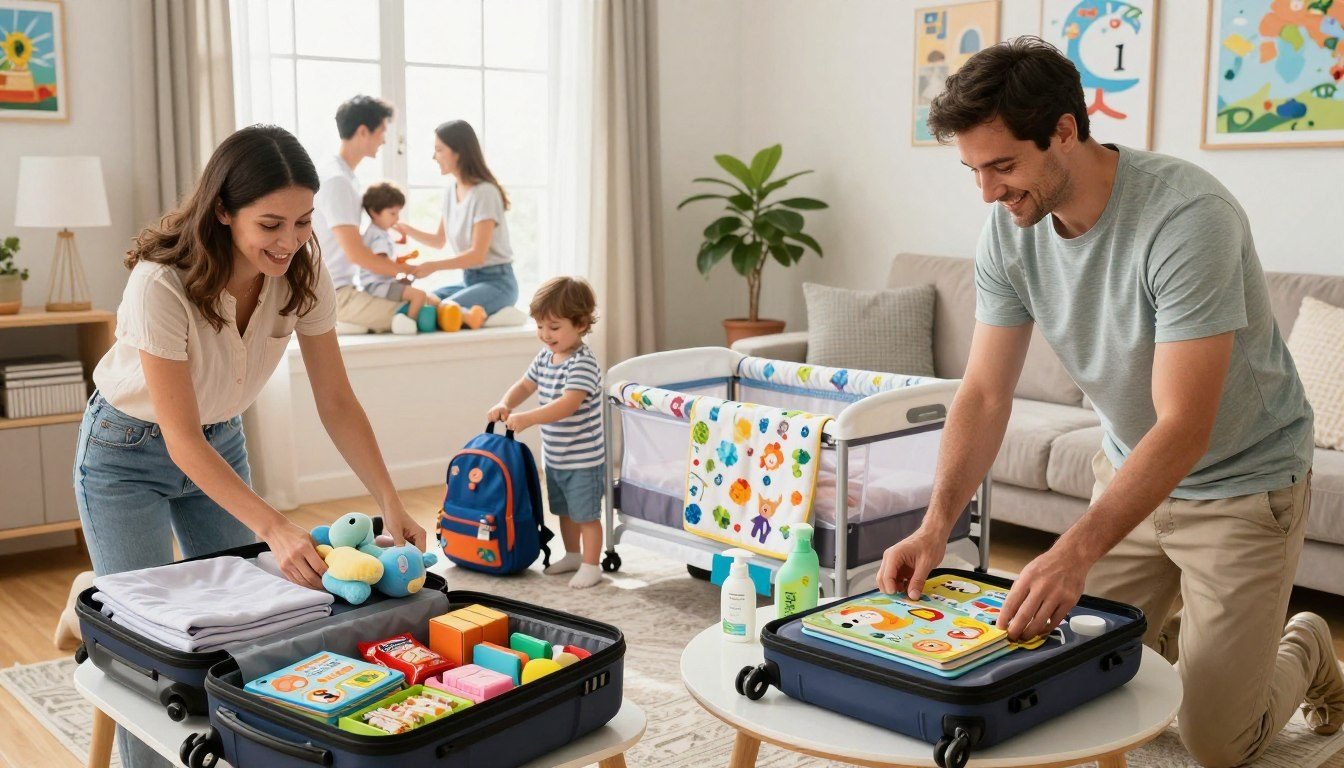
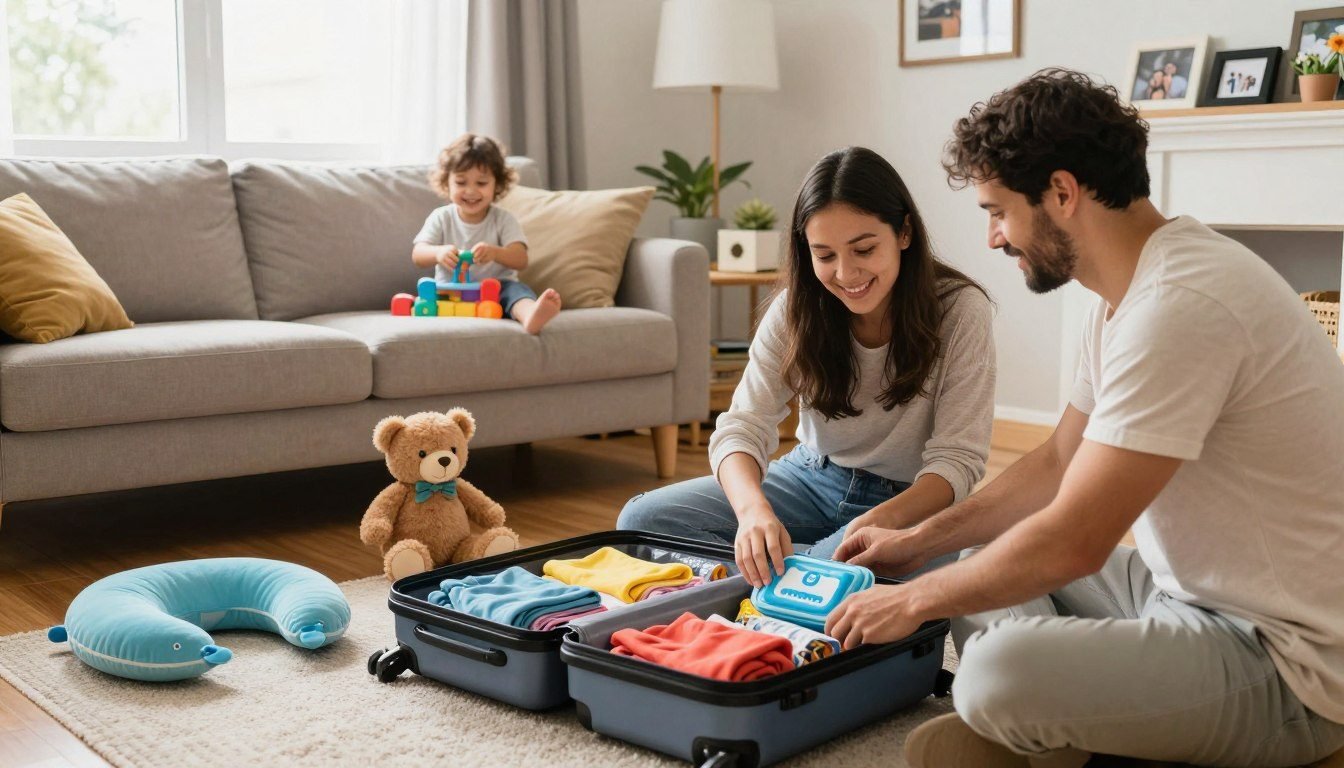
Create a Prepare list for each child and each caregiver. Pack by category rather than by room — hygiene, clothing, entertainment — and use labeled packing cubes so anyone can find things without unpacking the whole bag.
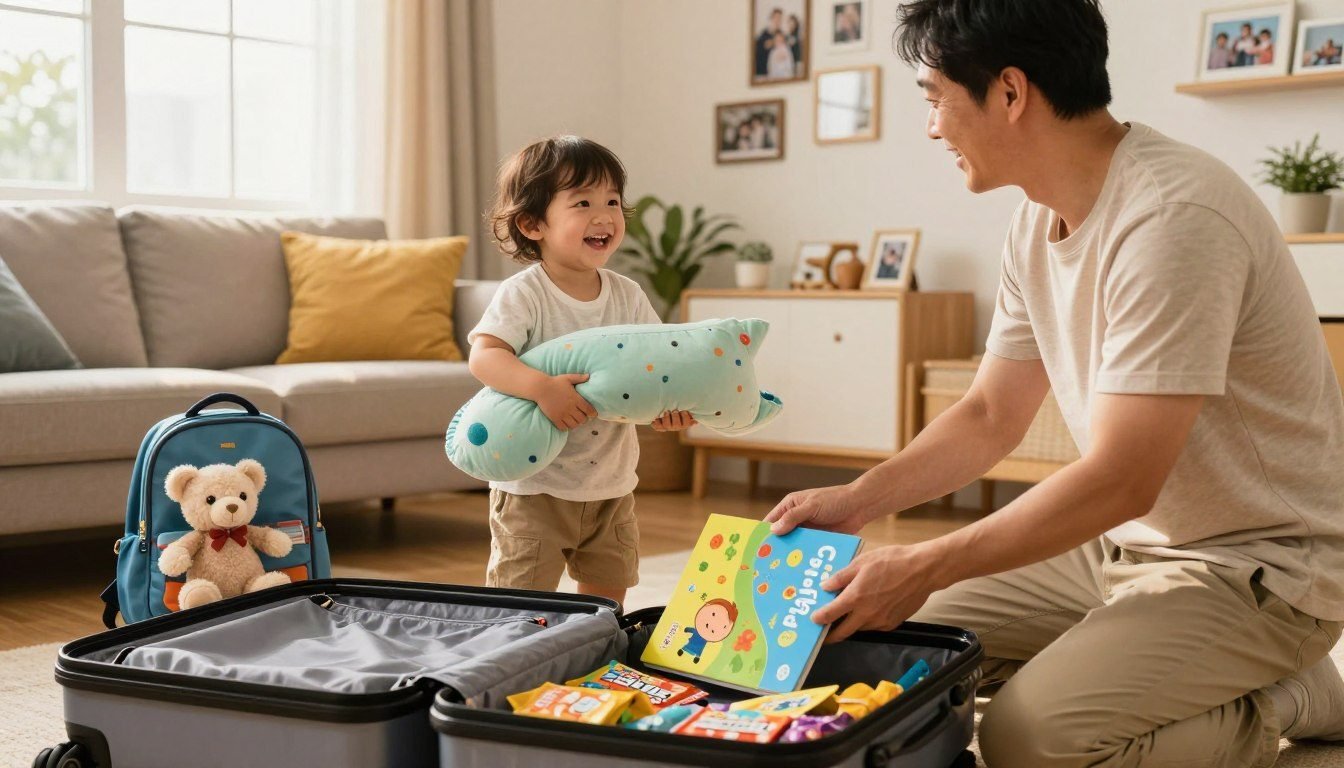
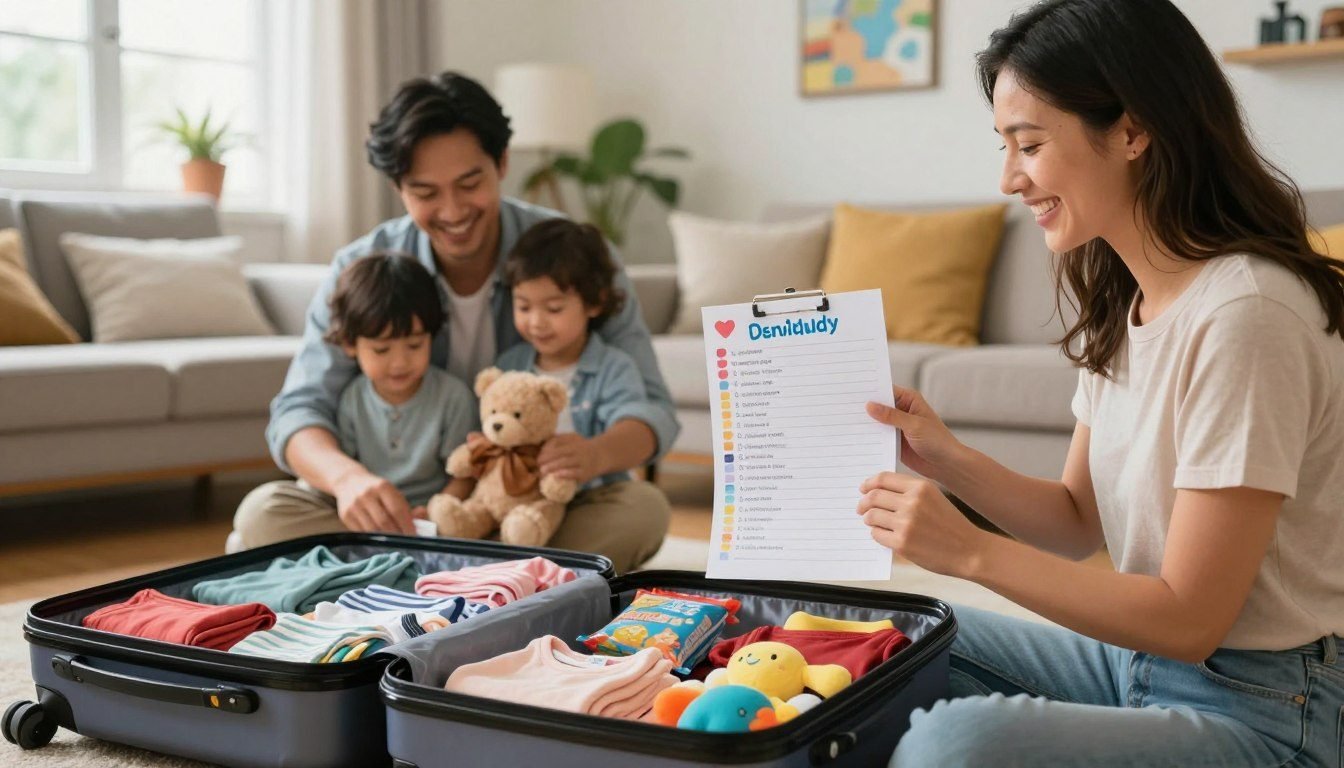
Give children small jobs that build confidence: let toddlers choose one comfort item, and let older children tick off their own books or toys on a printed list.
Pack for access, not only arrival. Put the next snack, a spare outfit, wipes, medicine, and a comfort item in a personal day bag within arm’s reach.
Make room for emotional security. A familiar bedtime book or a simple visual schedule helps children feel safe in new places — and a quick game or shared snack turns stress into a memory.
The four-part rhythm at a glance
Plan — logistics → reduce anxiety
Prepare — organization → save time
Travel — accessibility → maintain comfort
Enjoy — connection → build memories
Travel necessities for kids: the 30 must-have items
A reliable checklist keeps your family calm on the road. Every journey is different, so use this as a menu, not a rule book — choose what fits your child’s personality and destination. Focus on emotional security and practical needs, and you’ll stay organized without overloading the luggage.
Comfort & emotional security
1. Favorite lovey, blanket, or stuffed animal
2. Familiar pacifiers, teething toys, or sensory tools
3. Small family photo or child-friendly visual schedule
4. Child-size headphones for overwhelming noise
Clothing
5. Complete spare outfit in an easy-access bag
6. Weather-appropriate layers (fleece, sun hat)
7. Comfortable shoes, plus backup socks and underwear
21. Portable white-noise machine or downloaded track
22. Familiar sleep sack or lightweight blanket
23. Travel night-light
24. Toddler pillow or approved child-size sleep support
Safety & health
25. Child-appropriate first-aid kit
26. Regular medications, dosing tools, written instructions
27. Sunscreen, insect repellent, basic skin care
28. Car seat or approved child restraint
Getting around
29. ID card with caregiver contact information
30. Compact stroller, carrier, or mobility support
The goal of the list is to give your children a sense of predictability. Keep it flexible for spontaneous joy — thoughtful planning is what makes a family adventure smoother and more connected.
Free printableFree Travel Packing Checklist (PDF)
Every category above as a one-page, tick-as-you-go printable — comfort, clothing, snacks, hygiene, entertainment, sleep, and safety. Download it before your next family trip.
No daily spam — just practical family-travel ideas and new planning tools.
✓ Check your inbox — your checklist is on its way.
Airplane travel essentials: build an accessible carry-on
Flying compresses every travel stressor into one seat, so packing a smart, reachable bag matters most. Keep the toddler travel essentials within reach and you’ll avoid stressful searches through the overhead bin. For the full airport-to-arrival plan, see our first flight with a toddler checklist.
Pack a personal child bag with only reachable essentials — a comfort item, one quiet activity, headphones, a snack, a spill-proof cup, wipes, and one spare outfit. Keep it separate from your main luggage.
Prepare for takeoff and landing. Offer an age-appropriate drink, snack, or pacifier during climb and descent to encourage swallowing, which helps equalize ear pressure.
Plan for spills and delays. Keep extra diapers, medication, food, and a change of clothes in the cabin — never in checked luggage.
Run the airport checklist before you leave home: IDs, tickets, car-seat and stroller rules, and your airline’s medication policy. A calm review the night before means an easier travel day. More on the day itself: flying with a toddler.
Road trip essentials: make the car easier to manage
The accessibility ideas behind airplane travel also work on the road — keep key supplies close for a calm, connected drive. Our full road trip with a toddler guide covers pacing the day.
Set up a safe, comfortable seat. Check that the car seat or booster fits your child’s height and weight and is installed correctly.
Create a seat-side supply kit — water, snacks, tissues, wipes, a small activity, and a comfort item — where a caregiver can reach it safely.
Build in predictable breaks. Stop every couple of hours to stretch, use the bathroom, and reset everyone’s mood before a crisis.
Prepare a backup bag with clinician-recommended motion-sickness supplies, extra clothing, trash bags, and offline directions.
Run the road-trip checklist before departure: fuel, car-seat installation, weather, chargers, emergency supplies, and the next planned stop.
“The secret to a peaceful journey is not avoiding the need for supplies, but ensuring they are ready before the first mile is behind you.”
Family vacation packing for days away from home
A week-long getaway uses the same plan as a road trip — the stay is just longer. Pack for realistic conditions so everyone is comfortable without an overstuffed suitcase. Pair this with our printable family vacation packing checklist.
Pack clothing for realistic conditions: mix-and-match outfits, layers, swimwear, sun protection, pajamas, and more than one messy-day option.
Plan food around availability and familiarity. Bring dependable snacks for arrival day and scout grocery or restaurant options near the destination.
Pack a curated set of activities — a small selection to rotate rather than every toy, so children have choices without an overloaded bag.
Protect routines while allowing flexibility. Even on full days, familiar sleep supports, comfort items, and hygiene supplies help children feel safe. See toddler sleep while traveling.
Run the vacation checklist before leaving: weather, medication quantities, laundry access, destination activities, and what you’ll need for the trip home.
Hotel stays: pack for sleep, safety, and easier transitions
Make the room safe before unpacking. Move breakables and cords out of reach, check that balcony doors and windows lock, and store medications and toiletries high and away.
Recreate a small bedtime routine — the same pajamas, books, white noise, night-light, and calming sequence you use at home. More: help a toddler sleep in a hotel.
Confirm sleep arrangements before arrival: a crib or rollaway bed, refrigerator, blackout options, and the room layout. See best toddler travel beds.
Set up a snack-and-hygiene station — one “home base” with water, approved snacks, cups, wipes, toothbrushes, and nighttime supplies together.
Run the hotel checklist: room safety, emergency exits, pool rules, temperature, sleep space, and next-day essentials.
“Consistency is the secret language of comfort for a child in a new environment.”
Travel and enjoy the trip without chasing perfection
A family trip succeeds through your daily rhythm, not a perfect itinerary. Your gear should support the journey, not control every hour.
Travel with a simple Plan, Prepare, Travel, Enjoy rhythm: plan the next transition, prepare the next need, move at a manageable pace, and enjoy the small moments.
Respond to hard moments with connection first. Before expecting cooperation, check whether your child is hungry, tired, or overstimulated — and offer closeness, food, rest, or a quiet break.
Use necessities as tools, not guarantees. Even a perfectly packed bag can’t prevent tiredness or big feelings — those are normal during travel.
Leave space for connection: notice a funny sign, share a snack, read together, or let children help choose the next small activity.
Reset after the trip. Return favorite items to their places, restore familiar routines, and talk positively about what your child managed.
Travel essentials parents love
Most of a family trip runs on a handful of items that earn their space. Choose by what fits your trip — and always follow each product’s age and safety guidance.
Travel backpack. A pack your child can carry, for activities and reachable essentials.
Packing cubes. One set per person keeps a shared suitcase findable.
Travel stroller. Light and gate-check friendly for terminals and sightseeing.
Travel toys. A few mess-free activities to rotate.
Travel snacks. Familiar, filling options for planes, cars, and days out.
Travel bed. A familiar sleep surface when a crib isn’t guaranteed.
The FamilyDecode travel method
A checklist is preparation made visible. You Plan the trip around your child’s needs, Prepare by packing from a list rather than memory, Travel by staying flexible when a nap or plan slips, and Enjoy by keeping the focus on time together. Decode the challenge, plan the solution, practice the routine, review what works — the same FamilyDecode method we apply to every family moment.
Frequently asked questions
What are the essential travel necessities for kids?
The most useful travel necessities for kids support four needs: comfort, care, safety, and connection. Beyond weather-appropriate clothing, that means an emotional comfort item (a favorite lovey or blanket), reliable snacks and water, a small health and hygiene kit, and one or two familiar routines. Pack against those four filters and most “just in case” items fall away.
How do I pack for kids without overpacking?
Filter every item by your child’s real, likely needs rather than worst-case scenarios, and favor things that do more than one job. Build one family checklist before you choose bags, and if your destination has a shop or laundry, pack fewer spares. Packing by category, not by room, also stops you from doubling up.
What airplane travel essentials should go in the carry-on?
Keep a small, reachable personal bag with a comfort item, child-size headphones, one quiet activity, a spill-proof water cup, snacks, wipes, and one spare outfit. Add anything you can’t be without — medicines, extra diapers, and enough food for a long delay — and never check those items.
What are the best road-trip essentials for kids?
Set up a seat-side kit a caregiver can reach safely: water, protein-rich snacks, tissues, wipes, a small activity, and a comfort item. Fit the car seat or booster correctly for your child’s size, plan a movement-and-bathroom break every couple of hours, and carry a small “just in case” bag for spills or motion sickness.
How can I help my child sleep better in a hotel or rental?
Recreate home’s sleep cues. Bring the same pajamas and bedtime book, add a portable white-noise source and a familiar night-light, and confirm the crib or bed before you arrive. A dark, calm, predictable setup does more for sleep than any single gadget.
What should be on a family vacation packing list for a week away?
Pack mix-and-match, layerable outfits with more than one messy-day option, dependable snacks for arrival day, a small rotating selection of activities, and the sleep and hygiene items that protect your child’s routine. Before you leave, check weather, medication quantities, laundry access, and what you’ll need for the trip home.
Written by Mohamed Lachkar — Founder & Editor of FamilyDecode, writing practical family-travel systems for parents of young children. More about the author →
Published and last reviewed September 2026.
General family-travel guidance, not medical or professional safety advice. Follow current airline, accommodation, healthcare, and product-manufacturer guidance.
Mohamed Lachkar is the Founder & Editor of FamilyDecode. He develops practical family guides, planning tools and resources designed to turn recurring family challenges into clearer, repeatable systems.