How to Use a Pregnancy Pillow: 7 Sleep Positions by Trimester (U, C, J and Wedge)
← Part of our Family Routines and Sleep guides
General parenting information, not medical advice. Decode → Plan → Practice → Review.
← Part of our Family Routines and Sleep guides
General parenting information, not medical advice. Decode → Plan → Practice → Review.
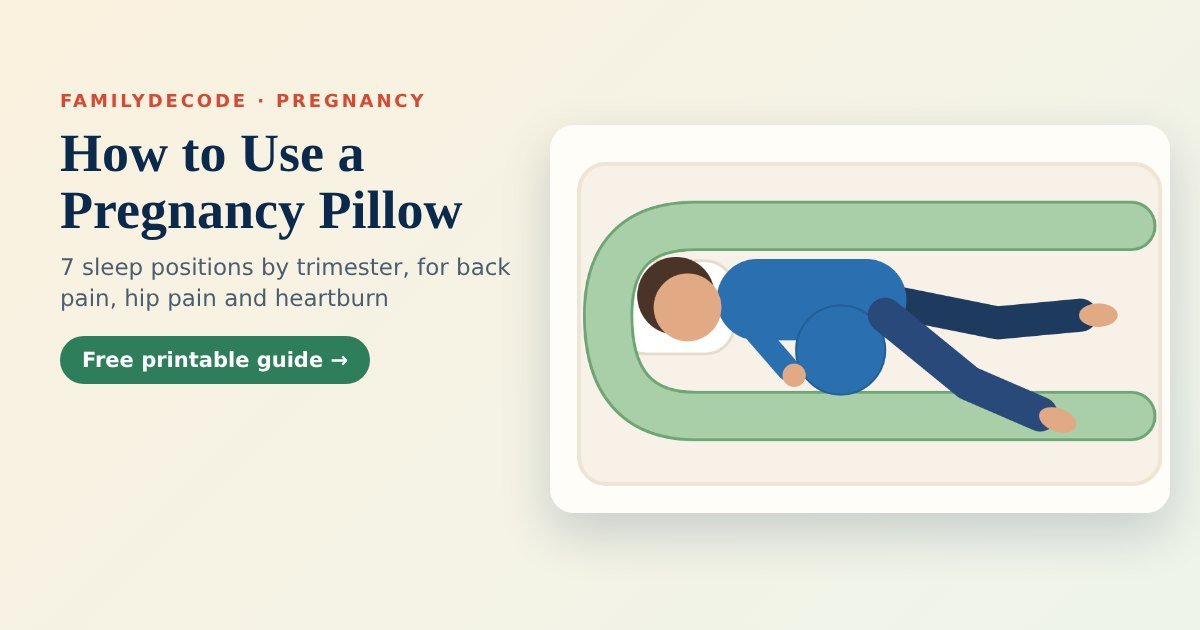
You bought the pregnancy pillow, took it out of the bag, and now there’s a giant U (or C, or J) taking up half the bed. Which end goes where? Does it go between your knees or under your bump? And are you supposed to sleep inside it or on top of it?
This guide shows you exactly how to use a pregnancy pillow, with 7 illustrated sleep positions for every pillow shape (U, C, J, wedge and straight body pillows). You’ll also find what changes each trimester, when to start using a pregnancy pillow, the best setups for back pain, hip pain, sciatica, rib pain and heartburn, how to choose one, how to wash it, and a free printable sleep guide for your nightstand.
A pregnancy pillow is a long, shaped body pillow (usually U, C or J shaped, or a small wedge) that supports your body while you sleep on your side. As your bump grows, your belly pulls your spine forward, your top knee drops toward the mattress and twists your hips, and it gets harder to stay on your side all night. A pregnancy pillow does three jobs:
The benefits of a pregnancy pillow are mostly about comfort: many people find they wake up less to reposition and have less hip and back ache in the morning. It doesn’t treat any condition, but it makes the sleep position health experts recommend much easier to keep.
The American College of Obstetricians and Gynecologists (ACOG) says that sleeping on your side during the second and third trimesters may be best. Lying flat on your back later in pregnancy puts the weight of the uterus on your spine and can press on a major blood vessel, which may make you dizzy and reduce blood flow to the baby.
The NHS goes further for later pregnancy: research suggests that after 28 weeks, falling asleep on your back can double the risk of stillbirth, so the safest position to fall asleep in is on your side. The NHS also reassures that if you wake up on your back, you don’t need to worry: just turn over and go back to sleep on your side. A pregnancy pillow is one of the easiest ways to make side sleeping comfortable enough to stay there.
Left or right side? Both are fine for most people. Some guidance suggests falling asleep on your left side when it’s comfortable, especially after 28 weeks, and switching sides during the night can ease hip and pelvic pain. Ask your midwife or doctor if you have a specific condition.
| Type | What it looks like | Best for | Watch out for |
|---|---|---|---|
| U-shaped | A big U that surrounds your body: one side in front, one behind, the curve under your head | All-over support, back pain, staying on your side, switching sides without moving the pillow | Takes up a lot of the bed; can feel warm |
| C-shaped | A C that cradles your head, bump and knees, open at the back | Head, bump and knee support; easy to get in and out | No back support; you have to flip it to change sides |
| J-shaped | A long straight pillow with a hook at the top for your head | Hugging and knee support; smaller beds | Less back support than a U |
| Wedge | A small triangle of foam | Under the bump, behind the back, or under your upper body for heartburn; travel; budgets | Supports one area at a time |
| Straight (I-shaped) body pillow | A long tube pillow | Hugging and placing between knees and ankles; light sleepers who move | No head or back support on its own |
| Inflatable / stomach-sleeping | A pillow with a hollow for the bump | People who miss lying face-down, usually earlier in pregnancy | Not everyone finds it comfortable; check with your provider |
| L, F and other shapes | Variations that add a back or head section | Specific support needs or small spaces | Fit varies; read the dimensions |
Start from the same base every night: lie on your side, bend your knees a little (or bend your top knee more than your bottom one), and keep your head in line with your spine. Then add the pillow.
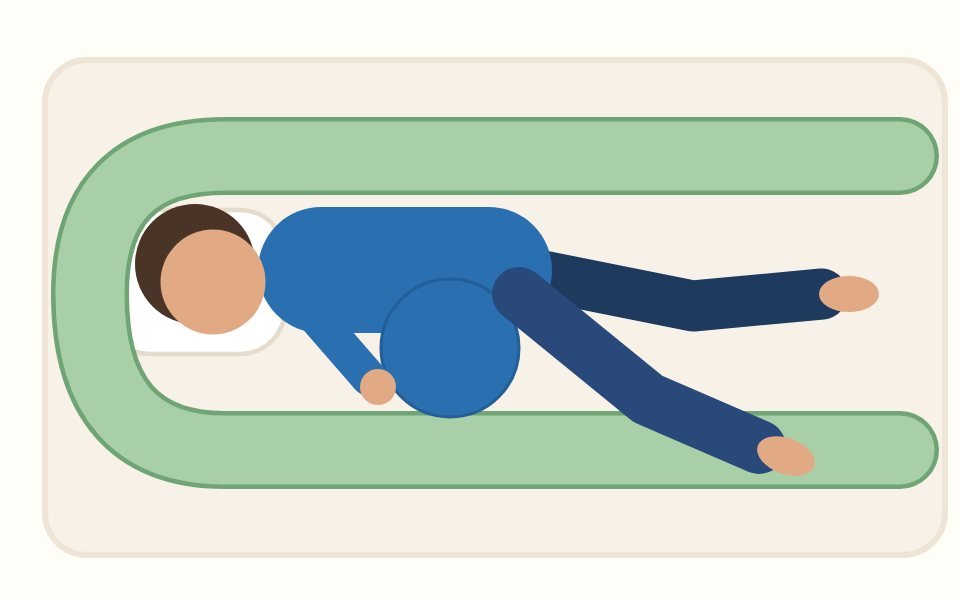
Best for: back pain, hip pain, people who change sides often and anyone who keeps waking up on their back.
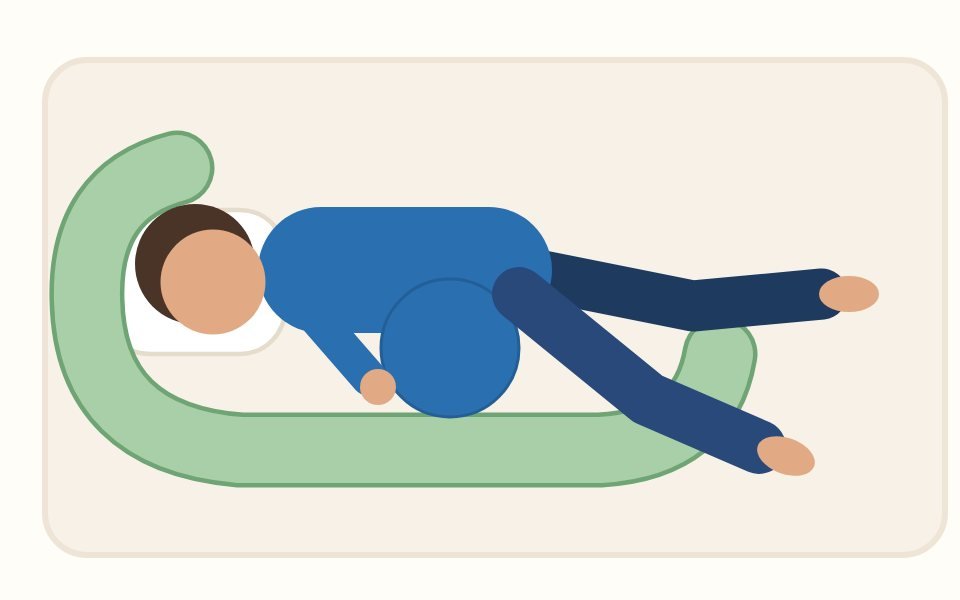
Best for: head, bump and knee support when you don’t need back support; getting in and out of bed easily.
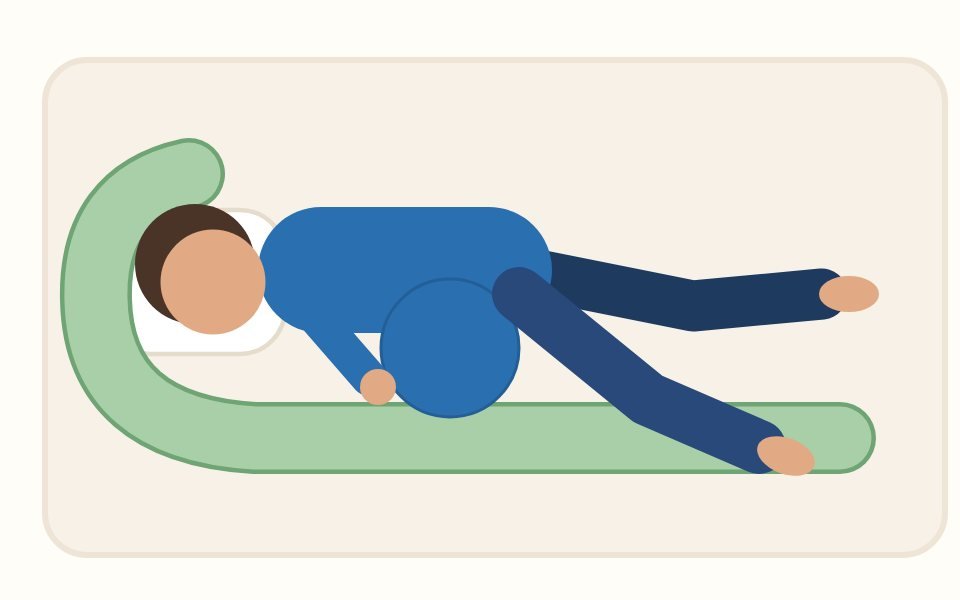
Best for: smaller beds, people who like to hug a pillow, and neck and shoulder support.
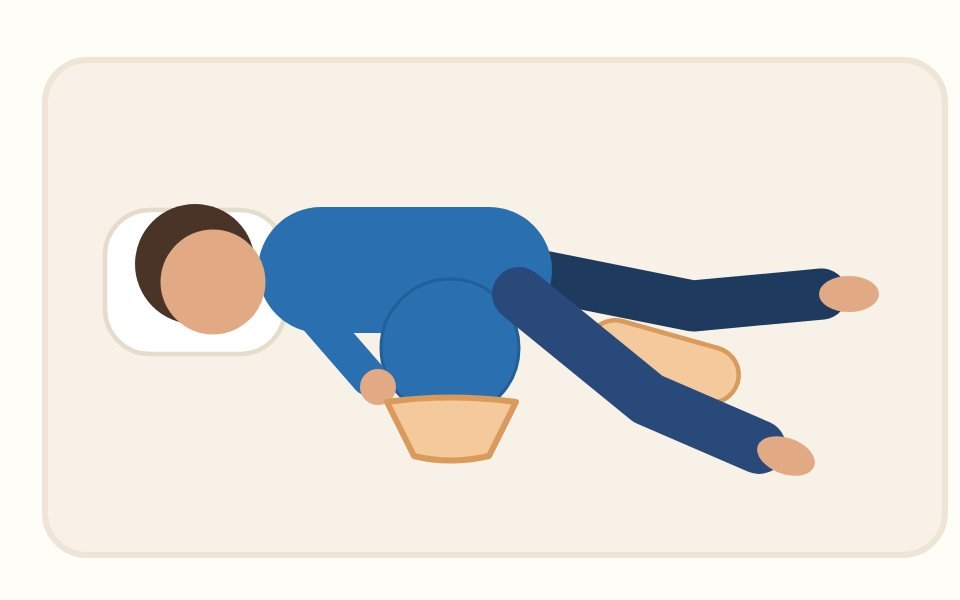
Best for: round ligament pain, a growing bump, travel and small budgets.
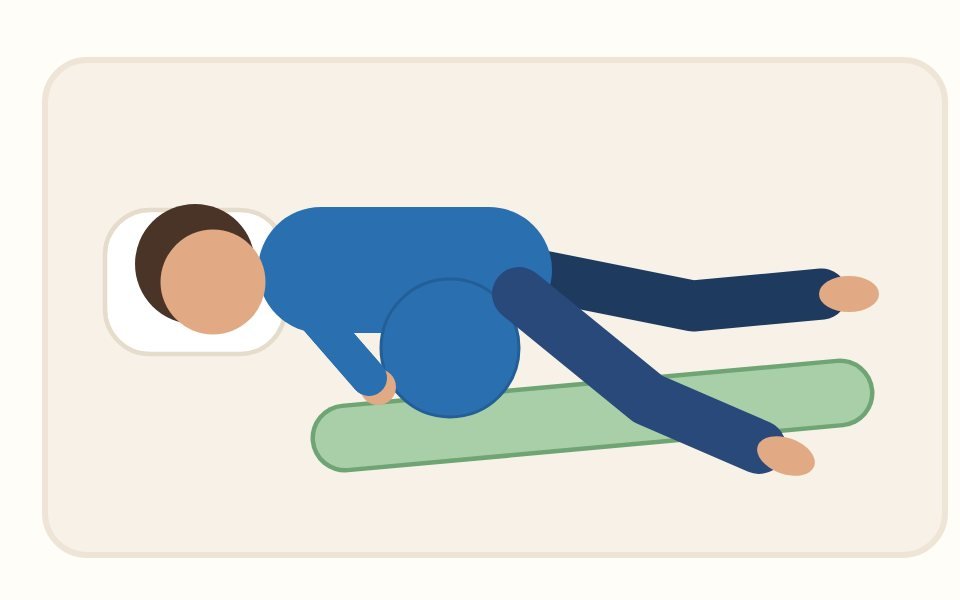
Best for: hip pain, pelvic girdle pain, sciatica and anyone who wants a simple, washable option.
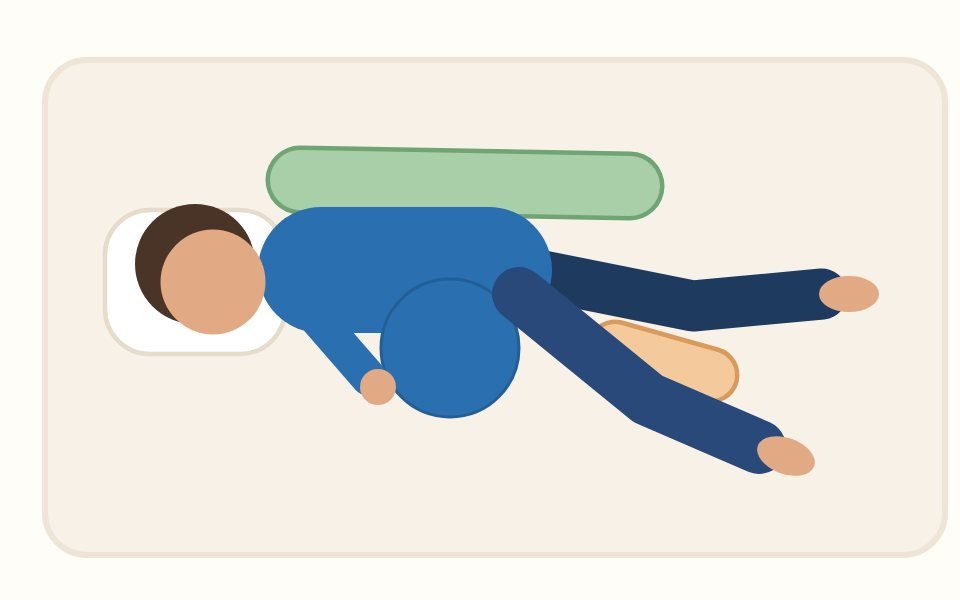
Best for: staying on your side in the third trimester, especially if you keep waking up on your back.
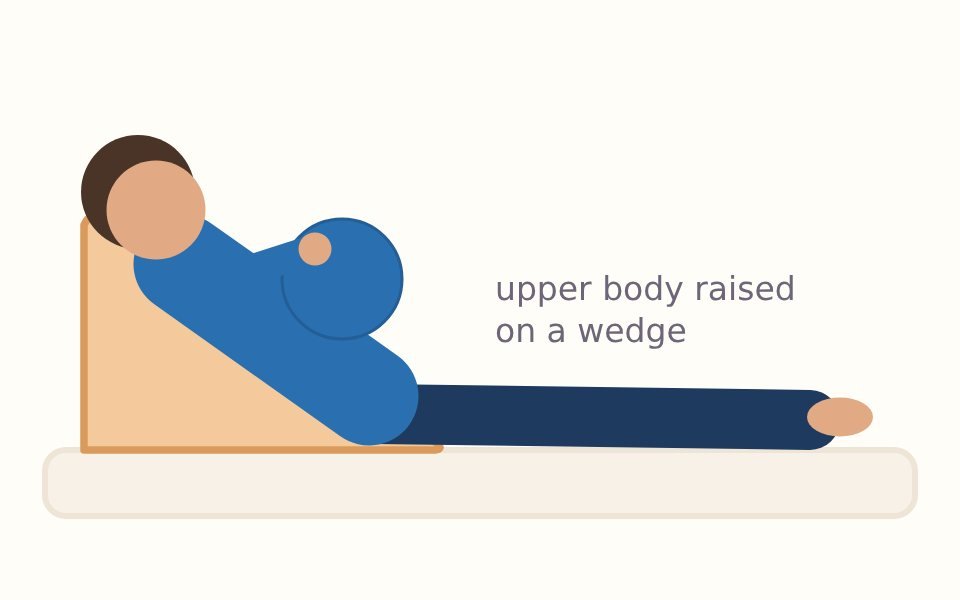
Best for: heartburn and acid reflux, rib pain, a stuffy nose and feeling short of breath late in pregnancy.
| Trimester | What changes | How to use your pillow |
|---|---|---|
| First (weeks 1–13) | Bump is small; tiredness and nausea are common | Sleep in any comfortable position. Start practicing side sleeping with a pillow between your knees. |
| Second (weeks 14–27) | Bump grows; back, hip and round ligament pain may start | Switch to side sleeping. Add a wedge or the front of your pregnancy pillow under the bump and a pillow between your knees. |
| Third (weeks 28–40) | Bigger bump, heartburn, rib pain, frequent waking | Go to sleep on your side. Use full support (U-shape, or a pillow behind your back) so you stay there; prop up for heartburn. |
Trimester weeks are approximate. If you’re carrying twins or have a medical condition, follow your care team’s advice about positions.
There’s no set week. Start when you’re uncomfortable or when you’re switching to side sleeping. For many people that’s somewhere in the second trimester, as the bump starts to show and back or hip pain begins. A good rule:
ACOG calls backache one of the most common pregnancy problems, especially in the later months. For sleep, it recommends lying on your side with one or both knees bent, a pillow between your knees and another under your belly, or a full-length body pillow. For lower back pain:
Call your provider if back pain is severe, lasts more than two weeks, or comes with fever, burning when you pee or bleeding.
Hip pain often comes from the top leg pulling your pelvis out of line. NHS physiotherapists at Leeds Teaching Hospitals suggest lying on your side with a pillow between your knees and ankles, and one under your bump, alternating between your left and right sides, and keeping your knees together when you roll over in bed.
If you have pelvic girdle pain (pain at the front or back of the pelvis), ask your midwife about a referral to a pelvic health physiotherapist.
Many people with sciatica feel better lying on their side with a pillow between the knees and ankles, often on the side that doesn’t hurt. A straight or U-shaped pillow works well. Sciatica in pregnancy should be checked by your provider, especially if you have numbness or weakness.
Round ligament pain is a sharp pull low on the sides of the bump, often when you move or turn over. Support the bump with a wedge or the front of a U or C pillow, and turn over slowly.
Later in pregnancy, the baby and uterus push up toward the ribs. Raising your upper body slightly (position 7) and switching sides often can make room and ease the pressure.
The NHS says propping your head and shoulders up when you go to bed can stop stomach acid coming up while you sleep, and that sleeping on your left side can also help. A wedge under your upper body (position 7) works better than stacking pillows under your head alone, which can bend your neck. Eating your last meal a few hours before bed helps too.
| If you… | Look for |
|---|---|
| Have back pain or keep rolling onto your back | A U-shaped pillow (or a J plus a pillow behind you) |
| Share a small bed | A J-shape, a straight body pillow or a wedge |
| Run hot at night | A breathable or cooling cover; a smaller pillow |
| Have hip or pelvic pain | A pillow long enough to reach your ankles |
| Get heartburn | A wedge you can also use under your upper body |
| Want to use it after the baby | A removable, washable cover; a shape that works as back support while feeding |
Check the dimensions against your bed, look for a removable, machine-washable cover, and choose a firmness that holds its shape overnight. Some families use an FSA or HSA card for pregnancy pillows; check your plan’s rules.
As an Amazon Associate, FamilyDecode earns from qualifying purchases. See our affiliate disclosure.
You don’t need one. Regular pillows can do the same jobs: one between your knees, one under your bump and one behind your back. A pregnancy pillow is worth it if:
If budget is tight, start with a wedge and the pillows you have. You can always add a full pillow later in the third trimester.
A spare cover means you never have a night without your pillow.
Many parents keep using their pregnancy pillow after the birth for back support while feeding, or for their own sleep after a C-section. One important rule: a pregnancy pillow is for you, never for your baby. The U.S. Consumer Product Safety Commission warns that pillow-like products, including nursing pillows, are not designed for sleep and are not safe for sleep. Babies should always sleep on their backs on a firm, flat surface with nothing else in the crib.
Getting ready for a new baby with older children at home? Our guide to preparing kids for big changes like a new baby can help, and our family daily schedule has sample routines for busy weeks.
Lie on your side with your knees bent. Rest your head on the top of the pillow, tuck the front part under your bump, and put the bottom section between your knees and ankles. With a U-shaped pillow, lean back into the back section so you stay on your side.
Sleep on your side with your knees slightly bent, your bump supported and a section of the pillow between your knees and ankles so your hips stay level. In the third trimester, a pillow behind your back helps you stay on your side.
Start whenever you’re uncomfortable. Many people begin in the second trimester as the bump grows. It’s a good idea to have one by about halfway through pregnancy, since the NHS advises going to sleep on your side after 28 weeks.
Either side is generally fine. Some guidance suggests falling asleep on your left side when comfortable, especially after 28 weeks, and switching sides can ease hip and pelvic pain. Ask your provider if you have a specific condition.
A U-shaped pillow gives the most support for back pain because it supports your bump, your knees and your back at the same time. A wedge under the bump plus a pillow between the knees is a cheaper option.
Lie on your side with a pillow between your knees and ankles so your top leg stays level with your hip, support your bump, switch sides during the night and keep your knees together when you roll over.
A U-shaped pillow supports your front and back, so you can switch sides without moving it. A C-shaped pillow supports your head, bump and knees but is open at the back, so you flip it when you change sides.
Yes. Using a wedge to raise your head and shoulders can help stop stomach acid coming up while you sleep, and the NHS notes that sleeping on your left side can also help.
No. Regular pillows between your knees, under your bump and behind your back can work. A pregnancy pillow is worth it if your pillows keep moving, you wake up on your back or you have back or hip pain.
Remove the cover and machine-wash it on a gentle cycle, following the care label. Spot-clean the insert unless the label says it’s machine-washable, and let everything dry completely before reassembling.
Yes. It’s common to move during sleep. The NHS says not to worry if you wake up on your back; just turn onto your side and go back to sleep.
Read next: Preparing kids for a new baby · Family daily schedule · Managing your own stress
Printables: Pregnancy & Newborn Planner (premium) · All free printables