
Pumpkin Painting Ideas for Kids: 25 Cute, Easy No-Carve Ideas
← Part of our Family Activities guide
General parenting information, not medical advice. Decode → Plan → Practice → Review.
← Part of our Family Activities guide
General parenting information, not medical advice. Decode → Plan → Practice → Review.
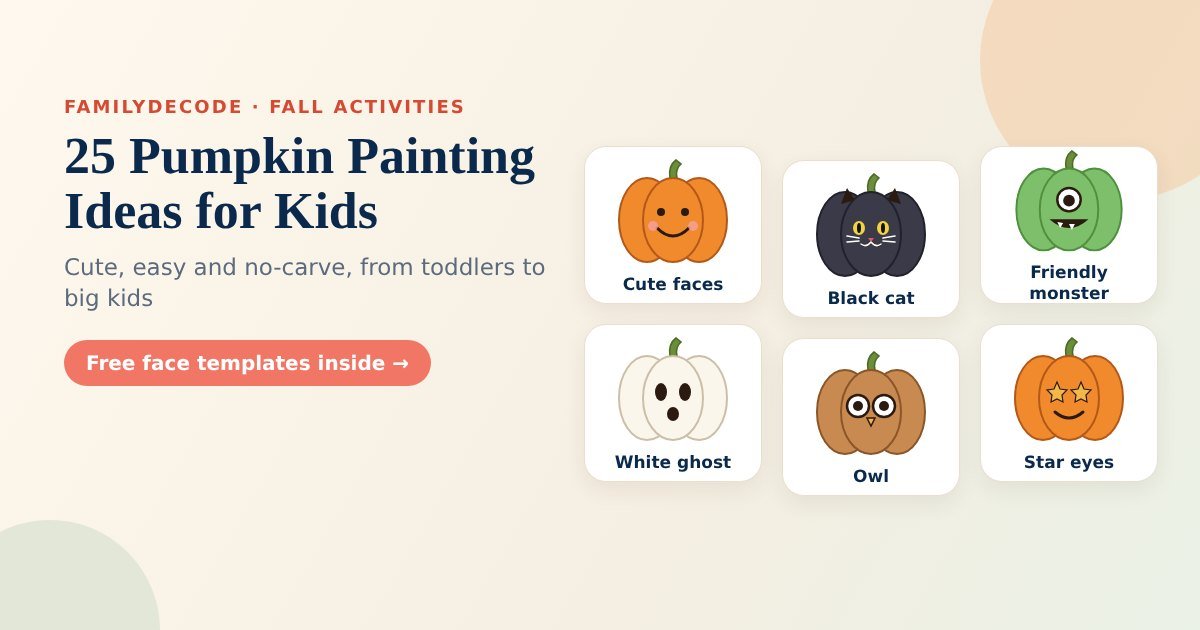
Every October, the same question comes up: how do you let little kids make their own pumpkin without handing them a knife? The answer is paint. Painting pumpkins is safer than carving, easier for small hands, less messy than scooping, and an uncarved pumpkin can stay on your porch long after Halloween, right through Thanksgiving.
Here are 25 pumpkin painting ideas for kids, from cute and easy faces to toddler-friendly dot and sticker pumpkins, fall and Thanksgiving designs, and learning pumpkins with letters and numbers. You’ll also find the best paint to use, a simple step-by-step method, ideas by age, safety tips and a free printable set of pumpkin painting templates.
Carving is a job for grown-ups. The U.S. Consumer Product Safety Commission estimates an annual average of about 3,200 Halloween-related injuries treated in emergency rooms, and 55% of them are related to pumpkin carving. The CPSC’s advice is to leave carving to adults and let children help by scooping or drawing the design.
Painting gives kids the whole job. They choose the design, do the work, and the pumpkin is truly theirs. There are other perks too:
| Paint | Best for | Good to know |
|---|---|---|
| Washable tempera paint | Toddlers and preschoolers | Easy cleanup; may flake or run if the pumpkin gets wet, so display it indoors or under a porch roof |
| Tempera paint sticks | Ages 2–5 | Like a glue stick with paint; almost no mess and dries fast |
| Dot markers | Ages 2–5 | Perfect for polka dots and counting games |
| Acrylic paint | Ages 5+ and keepsake designs | Bright and water-resistant once dry, but it stains clothes; use a smock |
| Paint pens | Ages 6+ and details | Great for faces, outlines, names and patterns |
Your pumpkin painting kit: small or white mini pumpkins (or real pumpkins from the patch), washable paint or paint sticks for little ones, acrylic paint for older kids, dot markers, chunky brushes and foam brushes, paint pens, painter’s tape, cotton swabs, a plastic tablecloth and a smock or an old T-shirt. Look for paints with the ACMI “AP” seal, which means the product is certified non-toxic for art use.
The simplest painted jack-o’-lantern: two black triangle eyes and a big smile, or round eyes and pink cheeks for an extra-cute version. A great first pumpkin.
Best for: ages 2+ (a grown-up can paint the outline)
Paint a family of small pumpkins with different faces: happy, sad, angry, surprised, scared. Talk about each feeling as you paint. It’s a lovely way to practice naming emotions; see our guide to teaching kids to name their emotions.
Best for: ages 3+
Paint the pumpkin green or purple, add one big eye (or five!), a wide mouth and pointy teeth. Older kids can glue on googly eyes.
Best for: ages 3+ (googly eyes for ages 3+ only, with supervision)
Paint the pumpkin black, add two felt or paper triangle ears to the top, yellow eyes and white whiskers with a paint pen.
Best for: ages 4+
A brown or white pumpkin with big circle eyes, a small orange beak and feather scallops painted on the front. Paper wings make it fly.
Best for: ages 4+
Red with black spots for a ladybug, or yellow with black stripes for a bee. Simple shapes, big result.
Best for: ages 3+
Use painter’s tape or freehand stripes in rainbow colors from top to bottom. A cheerful pumpkin that isn’t scary at all.
Best for: ages 4+
A white pumpkin with closed eyes and lashes, a paper or felt horn and flower crown on top. A favorite for kids who don’t like spooky.
Best for: ages 4+
For 1- to 3-year-olds, focus on the process: color, mess (a little) and the joy of “I did it.” Keep sessions short and use a small pumpkin they can turn themselves.
Hand your toddler a few dot markers and let them dot all over a white or orange pumpkin. Count the dots together.
Best for: ages 18 months+
Tempera paint sticks glide on like crayons and dry in minutes. Scribbles look amazing on a white pumpkin.
Best for: ages 18 months+
Dip fingertips in washable paint and press them all over the pumpkin for dots, flowers or a fingerprint “spider” family (add legs with a marker).
Best for: ages 2+
No paint at all: big foam or pumpkin decorating stickers for faces, stars and leaves. Peeling builds the pincer grasp.
Best for: ages 2+ (large stickers for under-3s)
Put strips of painter’s tape on the pumpkin, let your child paint over everything, then peel the tape when dry to reveal stripes or a zigzag.
Best for: ages 3+
Cotton swabs make small, neat dots that toddlers love. Make a rainbow, a smile or just a happy mess.
Best for: ages 2+
Want your pumpkins to last past October 31? These designs work all autumn, so your painted pumpkins can stay up until Thanksgiving.
Paint the pumpkin a soft color, then each person writes something they’re thankful for with a paint pen. Add to it all November and read it on Thanksgiving Day.
Best for: ages 5+ (younger kids can dictate)
Paint a brown turkey face on the front and add paper or painted feathers around the back. A perfect Thanksgiving table centerpiece.
Best for: ages 3+
Brush paint on a real leaf and press it onto the pumpkin. Mix fall colors for a pretty, natural look.
Best for: ages 3+
Older kids can paint crisscross stripes in two colors for a cozy plaid look that fits fall decor.
Best for: ages 7+
Paint your child’s name or initial in big letters, then decorate around it. Each child’s pumpkin is easy to spot on the porch.
Best for: ages 4+
More fall fun for the whole family: see our 50 Thanksgiving activities for kids and families and 30 Thanksgiving activities for preschoolers.
Paint the pumpkin black and draw a white web with a paint pen, or use white paint on an orange pumpkin. Add one friendly spider.
Best for: ages 5+
A white pumpkin is already a ghost: just add two big black eyes and an “oooh” mouth. Easy and only a little spooky.
Best for: ages 2+
Wrap strips of painter’s tape or white gauze around the pumpkin, leaving a gap for two big eyes.
Best for: ages 3+
Write letters all over a pumpkin with a paint pen, then play “find the letter in your name.” Mini pumpkins with one letter each can spell a word.
Best for: ages 3–5
Paint 1 to 10 dots on a row of mini pumpkins and line them up in order. Great counting practice for preschoolers.
Best for: ages 3–5
Cut shapes from paper or paint them: triangle eyes, a circle nose, a rectangle mouth. Name each shape as you go.
Best for: ages 3–5
| Age | Best ideas | Tips |
|---|---|---|
| 1–2 years | Paint sticks, dot markers, big stickers, fingerprints | Small pumpkin, washable paint, 10 minutes is plenty; never leave paint unattended |
| 3–4 years | Smiley face, ghost, ladybug, polka dots, tape resist, turkey | Let them choose colors; a grown-up can draw the outline to fill in |
| 5–7 years | Monster, cat, owl, spider web, thankful pumpkin, name pumpkin | Plan on paper first; try paint pens for details |
| 8+ years | Plaid, detailed animals, patterns, lettering | Acrylic and paint pens; a clear sealer (sprayed by an adult, outside) helps it last |
Make it a tradition: a family pumpkin painting night with music, cider or hot cocoa and a vote for the funniest pumpkin. For more fall evenings together, see our harvest moon family night ideas.
Painting is also a wonderful calm-down activity on a busy October afternoon. For more ideas, see our calming activities for kids, and if you’re shopping for a little artist, our best toys for 3-year-olds guide includes easels and mess-free markers.
As an Amazon Associate, FamilyDecode earns from qualifying purchases. See our affiliate disclosure.
Washable tempera paint, tempera paint sticks and dot markers are best for toddlers and preschoolers because they clean up easily. Acrylic paint is brighter and more water-resistant, so it’s better for older kids and designs you want to keep, but it stains clothes.
Yes, on a clean, dry pumpkin. It can flake or run if it gets wet, so display washable-paint pumpkins indoors or somewhere sheltered from rain.
An uncarved painted pumpkin lasts much longer than a carved one, often from early October through Thanksgiving if it stays cool and dry. Check it weekly for soft spots.
Try dot marker polka dots, paint stick scribbles, fingerprint designs, big stickers, a white ghost pumpkin and painter’s-tape stripes. Use a small pumpkin and washable paint, and keep it short.
Yes. The CPSC links 55% of Halloween-related emergency room injuries to pumpkin carving. Painting lets children do the whole project without sharp tools. Leave any carving to adults.
Yes. Wipe off dirt and let the pumpkin dry completely so the paint sticks. K-State Research and Extension suggests an adult wipe it with a solution of one part bleach to ten parts water before carving or painting.
Absolutely. Leaf prints, turkey faces, plaid patterns and a thankful pumpkin with what everyone is grateful for make lovely Thanksgiving decorations.
Read next: Thanksgiving activities for preschoolers · 50 Thanksgiving activities for families · 50 family Christmas traditions
Little ones? Teaching kids to name emotions · Calming activities for kids
Put it into practice: grab the free Pumpkin Painting Templates above, or browse the free printables library.